

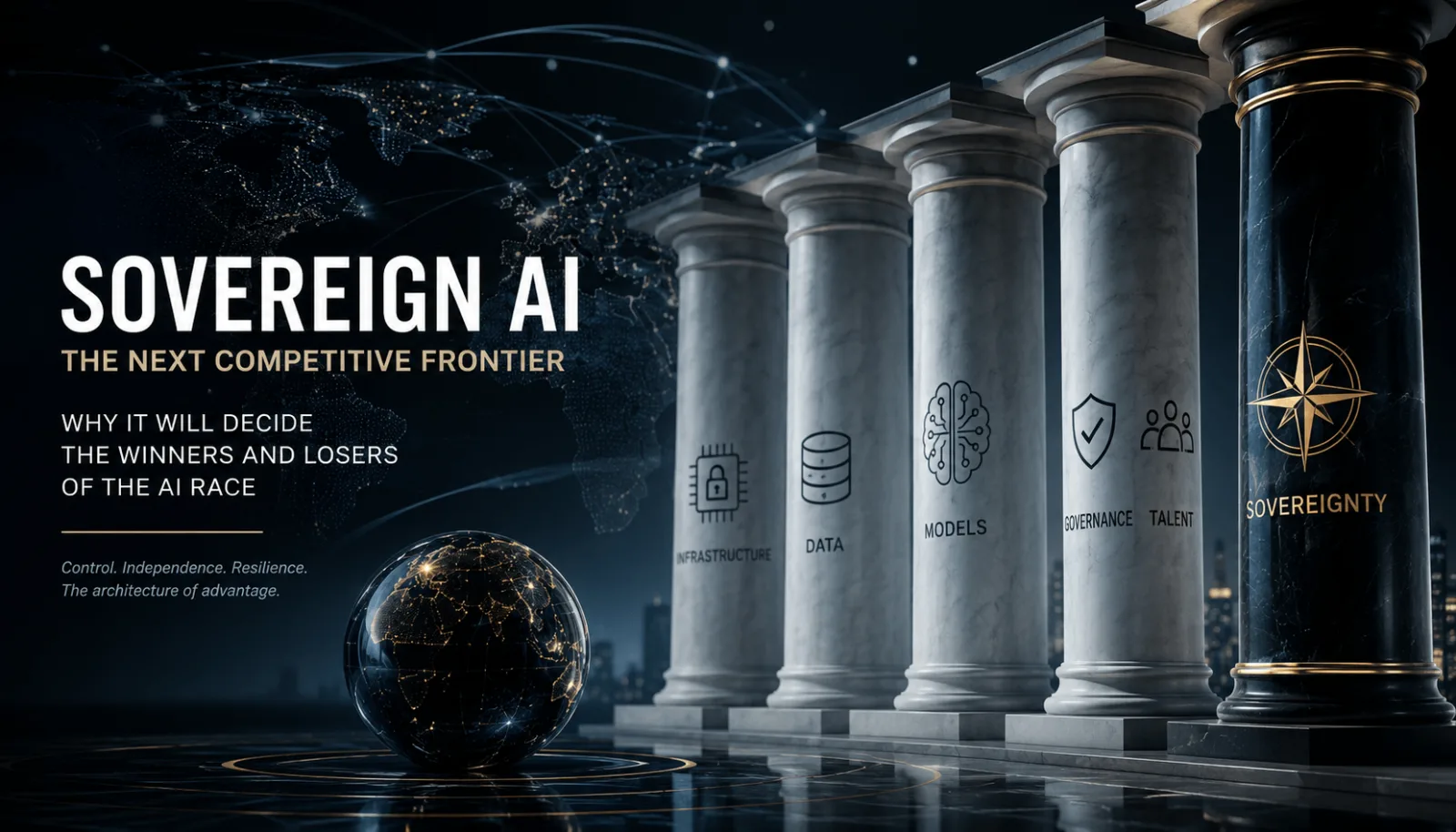
Sovereign AI is rapidly transforming from a buzzword into a critical strategic imperative that will decide which nations and corporations lead the artificial intelligence race. Contrary to popular understanding, sovereignty in AI does not simply mean choosing data centers based on geographic location or complying with regulations like GDPR. Instead, it encompasses a broader, more complex set of dimensions that define control over AI’s entire lifecycle—from infrastructure to data governance and supply chains.
Industry leaders and governments are recognizing that the current narrow interpretations of sovereign AI risk fostering vendor lock-in, compliance pitfalls, and operational vulnerabilities. Misconstruing sovereignty as solely data residency limits strategic options and leaves organizations exposed to economic and political risks as they build AI capabilities. The real definition of sovereign AI requires acknowledging AI compute as strategic infrastructure akin to energy grids or telecommunications networks.

This strategic reclassification has accelerated following landmark initiatives such as the U.S.’s $500 billion Stargate project, a joint effort by key technology players to assert control over the global AI supply chain. This illustrates a shift toward treating AI compute and hardware access as matters of national security and economic sovereignty, reshaping global investment and policy priorities. Concurrently, challenges to the assumption that raw computational power guarantees AI leadership emerged when research showed advanced AI training could bypass established chip export controls.
In parallel, Europe responded with political and financial commitments to secure digital sovereignty, exemplified by the Summit on European Digital Sovereignty. This event brought together policymakers and industry stakeholders, culminating in a comprehensive declaration backed by billions of euros in funding dedicated to strengthening Europe’s AI autonomy and ecosystem resilience.
These developments reflect the multi-dimensional nature of sovereign AI, which includes control over technology architectures, data sovereignty, supply chains, regulatory environments, and ecosystem independence. For corporate leaders and policymakers, embracing this comprehensive view will shape investment strategies, partnership decisions, and compliance frameworks as AI permeates critical sectors globally.