

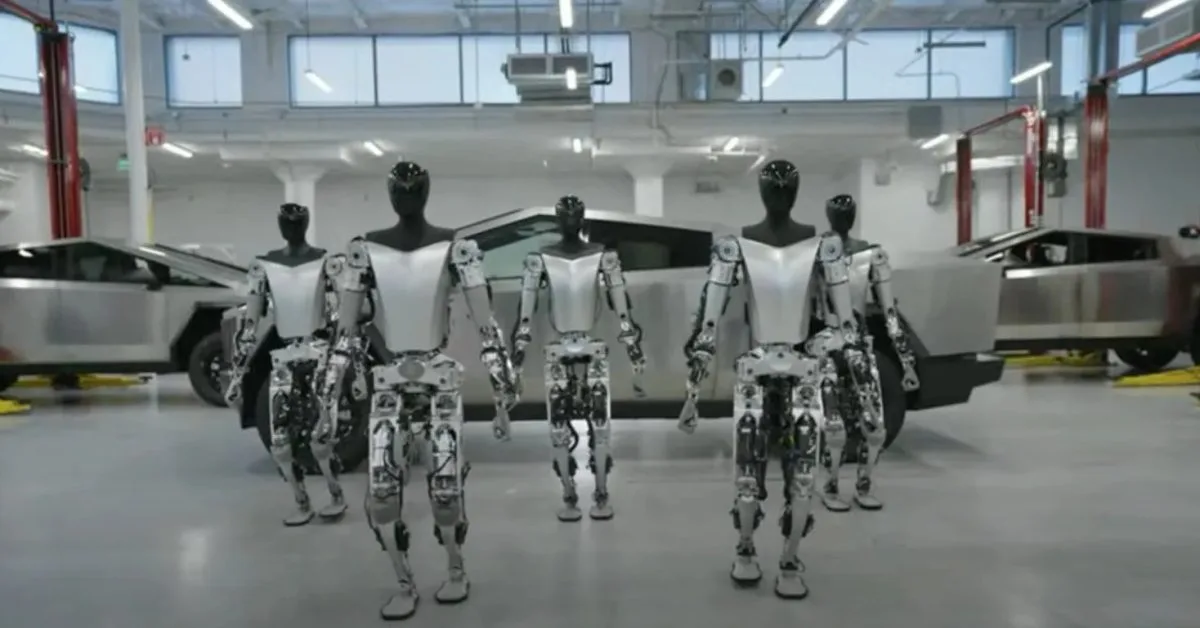
Elon Musk addressed widespread speculation suggesting Tesla’s humanoid robot, Optimus, is secretly ahead of schedule, confirming that production will begin cautiously and slowly. This contradicts fan theories portraying Tesla’s silence as a strategic ploy to outpace competitors unnoticed.
The skepticism follows Tesla’s repeated delays in showcasing the Optimus V3 model. Some enthusiasts believed Tesla’s quiet period indicated advanced progress, anticipating a large-scale reveal with numerous robots demonstrated simultaneously. Tesla’s VP of Vehicle Engineering had mentioned production was ahead, which fueled these expectations. However, Musk made it clear that the production challenges are significant, emphasizing that manufacturing Optimus is unlike producing vehicles.

Production is set to start at Tesla’s Fremont facility later this year, where the company reconfigured the assembly lines by ending Model S and Model X production specifically for Optimus. Musk forecasted a slow ramp-up due to the robot’s complexity, noting it comprises around 10,000 unique parts assembled on entirely new production lines. The early stages involve extensive learning and iterative improvements rather than mass output.
This measured outlook aligns with Tesla’s prior updates. Last year, Musk had projected ambitious targets of building thousands of Optimus units actively working in factories by the end of 2025, but those milestones were missed. Musk acknowledged no Optimus robots were yet performing useful tasks in Tesla plants, with most functioning only for testing and learning purposes.
The 2026 goals remain substantial, targeting tens of thousands of units manufactured, with Fremont aiming to reach an eventual annual run-rate of one million. Still, Tesla’s history of moving deadlines and cautious statements suggests a slow evolution of Optimus production and deployment.