

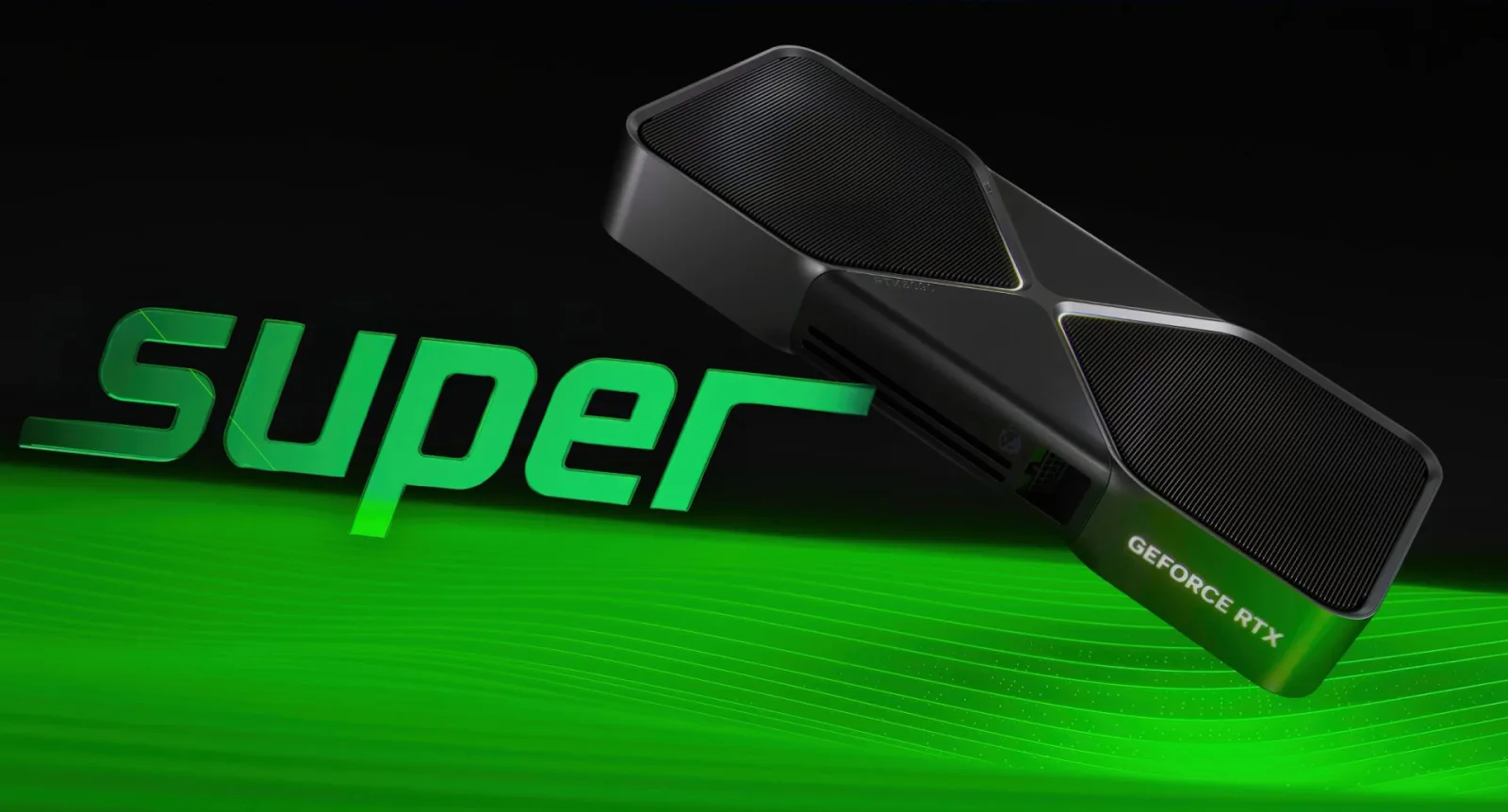
The NVIDIA GeForce RTX 5080 SUPER graphics card is expected to feature a thermal design power (TDP) of 415W, marking a notable increase over the 360W TDP of the standard RTX 5080. This elevation in power demand aligns with enhanced memory specifications and possibly higher clock speeds, suggesting a more performance-oriented version of the RTX 5080.
According to a recent update from power supply manufacturer Seasonic, which added the RTX 5080 SUPER to its wattage calculator database, the new card will pair 24 GB of GDDR7 VRAM operating at 32 Gbps with a 256-bit memory bus. This surpasses the non-SUPER RTX 5080 that uses 16 GB of VRAM at 30 Gbps. The memory improvements bring the bandwidth up to 1 TB/s, an increase from the previous 960 GB/s, reflecting a more robust memory subsystem.

While the RTX 50 SUPER series has faced delays linked to supply chain constraints and a shift in NVIDIA’s product focus toward AI-based GPUs, Seasonic’s listing provides fresh confirmation that these cards remain in development. Earlier announcements from the same manufacturer included the RTX 5070 Ti SUPER and RTX 5070 SUPER, leaving their power ratings unchanged at 350W and 300W, respectively.
The RTX 5080 SUPER, in contrast, appears to combine the same core count as the RTX 5080 but with a potential boost in clock speeds and significantly increased VRAM capacity—50% more than the baseline model. The rise in TDP by around 15% is partly attributed to these enhancements. The RTX 4080 SUPER saw a similar TDP increase, although that stemmed primarily from GPU core improvements rather than memory.
As of now, NVIDIA has not disclosed an official release date for the RTX 50 SUPER lineup, and no partners or manufacturers have publicly showcased these models at recent industry events like Computex. Industry insiders speculate that the launch might occur in the latter half of next year or during the consumer technology gathering at CES in early 2027.
This emerging generation of GeForce RTX cards aims to strengthen NVIDIA’s presence in the high-performance GPU market by balancing increased memory bandwidth and capacity with proportional rises in power consumption.