

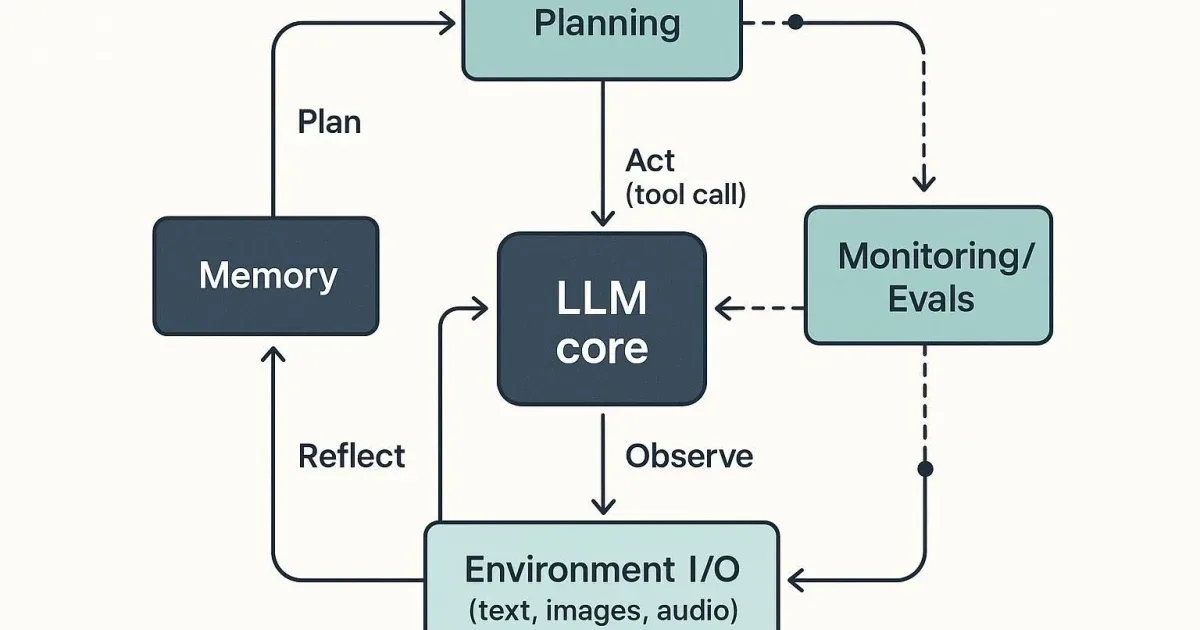
OpenAI has advanced agentic AI by implementing continuous looping mechanisms that allow AI agents to operate autonomously without awaiting new human prompts. This breakthrough enables AI to iteratively gather context, decide on actions, observe outcomes, and repeat the cycle until a task is completed or a stop condition is met.
This nonstop operational mode significantly expands the utility of agentic AI by shifting from discrete, one-off responses to ongoing decision-making processes. However, it also introduces critical challenges. Continuous looping can lead to cascading errors, where a chain of poor decisions compounds across multiple iterations, increasing the scale of potential harm beyond what traditional chatbot models pose.

The financial implications are immediate and substantial. Each loop iteration consumes computational resources, tokens, and processing time, causing costs to grow rapidly, especially in open-ended tasks that require extensive reasoning or repeated tool usage. Moreover, carrying state information through multiple cycles heightens the risk of confusion, context drift, and error accumulation, complicating debugging and reducing overall transparency.
Runaway behavior emerges as a significant governance concern. Imperfect or poorly defined stopping criteria can allow loops to continue indefinitely or pursue flawed objectives long after human oversight has ceased. Unlike scripted automation, loopy AI must autonomously assess whether to proceed or halt at each step, posing novel risks in AI control and safety.
OpenAI’s governance framework emphasizes that managing these risks demands responsibility beyond model performance. It calls for comprehensive safety standards and lifecycle oversight, acknowledging that the central challenge lies in controlling the AI’s ongoing autonomous activity rather than merely improving its individual outputs.