

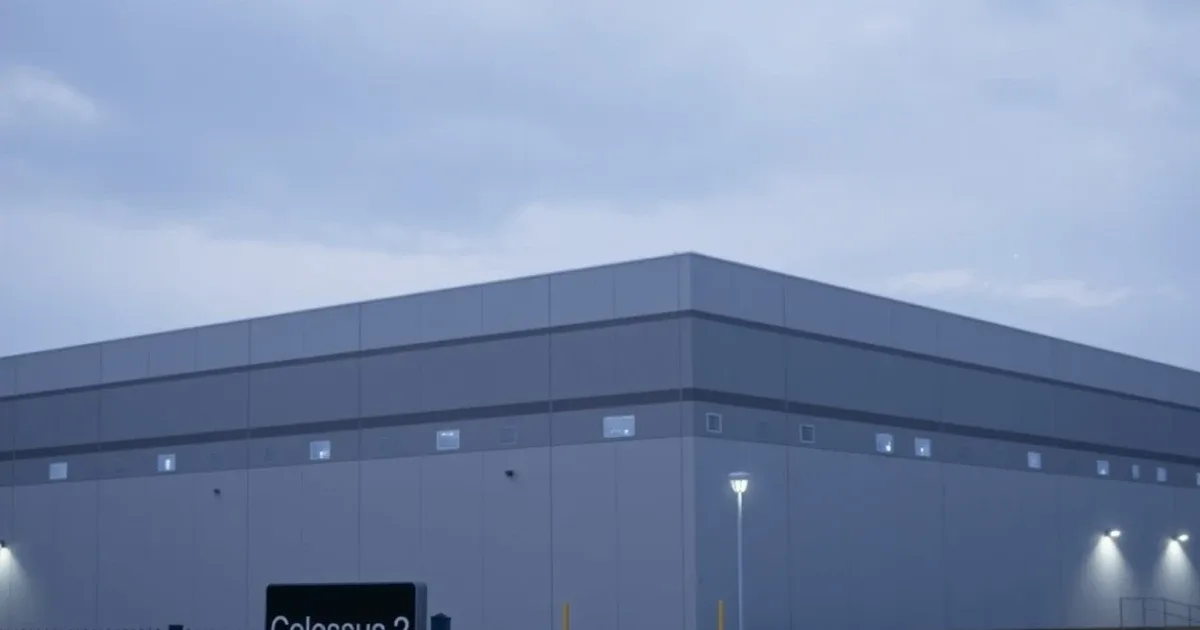
Reflection AI reached a landmark agreement with SpaceX securing immediate access to Nvidia GB300 chips hosted at SpaceX’s Colossus 2 data center near Memphis, Tennessee. The contract commits to monthly payments of $150 million starting mid-2026, potentially totaling about $6.3 billion if extended through 2029. This deal positions Reflection AI within the elite circle of AI companies with access to scarce, high-performance compute resources essential for training advanced artificial intelligence models.
The contract includes a flexible exit clause allowing either party to terminate the agreement after an initial three-month period with a 90-day notice. This flexibility underlines the immense cost and strategic value tied to frontier compute capacity, an increasingly critical bottleneck in the AI ecosystem. SpaceX is leveraging this asset by expanding Colossus 2 from a proprietary platform supporting Elon Musk’s Grok chatbot into a commercial hub servicing external AI developers, including industry giants such as Anthropic, Google, and Cursor.

Reflection AI emerged in 2024, founded by former DeepMind researchers Misha Laskin and Ioannis Antonoglou. Backed by prominent investors like Eric Schmidt, Citi, 1789 Capital, Lightspeed, and Sequoia, the startup raised $2 billion in funding that valued the company at $8 billion in 2025. The infusion of advanced compute through SpaceX fuels Reflection’s goal of advancing open-source AI models, traditionally challenging for smaller players due to infrastructure costs. Alongside this contract, Reflection AI is also linked to the U.S. Department of Energy’s Genesis Mission, a federal initiative committed to accelerating scientific discovery through AI, reflecting the company’s expanding role in national AI priorities.
In parallel, other contracts highlight the premium nature of GPU resources. For instance, Google’s deal with SpaceX reportedly involves monthly payments nearing $920 million. These figures illustrate the growing financial stakes as AI developers race to secure stable, large-scale compute capacity to train and deploy next-generation machine learning models. As compute power consolidates under a few providers, firms like SpaceX gain rising influence over the AI sector by selling access to these critical technological assets.