A Supreme Court ruling this week upended a cornerstone of the civil rights movement by restricting how states can use racial demographics when drawing congressional districts. The decision, which involved a challenge to Louisiana's congressional map, prompted warnings from Black lawmakers and voting rights advocates that hard-won gains in political representation face erosion across the South and beyond.
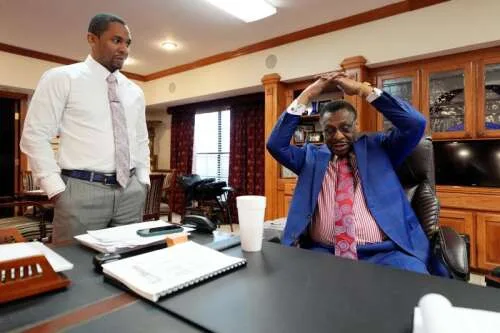
Edward Blackmon Jr., a 78-year-old civil rights lawyer and former Mississippi state legislator, was among the generation who fought to dismantle voting barriers in the decades after the Voting Rights Act of 1965. Arrested at 16 during a voting rights protest, Blackmon went on to challenge discriminatory election systems in courtrooms. Now he watches as the legal tools he wielded face significant constraints. "It's just another cycle — an ongoing struggle without a foreseeable ending," he said.

The court's majority opinion characterized racism as a historical problem, but critics called the decision a step backward. One Louisiana politician described it as "a defibrillator to the heart of Jim Crow." The ruling opens pathways for states to redraw districts in ways that could reduce the electoral power of Black voters, particularly in races below the presidential level that often serve as stepping stones to higher office.
Davante Lewis, a 34-year-old Louisiana Democrat on the state's utility regulatory board and one of the original plaintiffs in the Louisiana case, said districts could be redrawn to target Black communities and block candidates like him from winning elected office. Jamie Davis, a Black farmer in northeast Louisiana and a Democratic Senate candidate, voiced concern that the decision could further depress voter turnout among those already skeptical their voices matter.
Before the Voting Rights Act's passage, Black voters in the Deep South had no guarantee of equal ballot access. Within a year, more than 250,000 Black Americans gained voting rights. By 2024, nearly 22 million Black voters were registered nationwide, according to census data.
Jonathan Jackson, a Democratic congressman from Illinois and son of the late Rev. Jesse Jackson, called the prospect that his children could grow up with fewer voting protections "surreal and devastating." Charles Mauldin, beaten by law enforcement during the 1965 Selma march known as Bloody Sunday, said he was disappointed but unsurprised. "They've been chipping away at the 1965 Voting Rights Act for the last 60 years," the 78-year-old said.
In Mississippi, where Black residents comprise about 38 percent of the population, State Rep. Bryant Clark said the ruling amounts to "a roundabout way to basically legalize racially discriminatory redistricting." Current maps allow Black voters to elect candidates in some districts while preserving Republican majorities statewide. Clark noted that in Mississippi, race and party affiliation are largely indistinguishable, making a race-neutral approach to redistricting effectively discriminatory.
Some observers predict the decision could mobilize new civil rights activism. State Rep. Justin Pearson of Memphis, running for Congress, said the ruling could "reinvigorate a civil rights movement in the South that demands equal representation, that demands fairness, that demands justice and equality."