

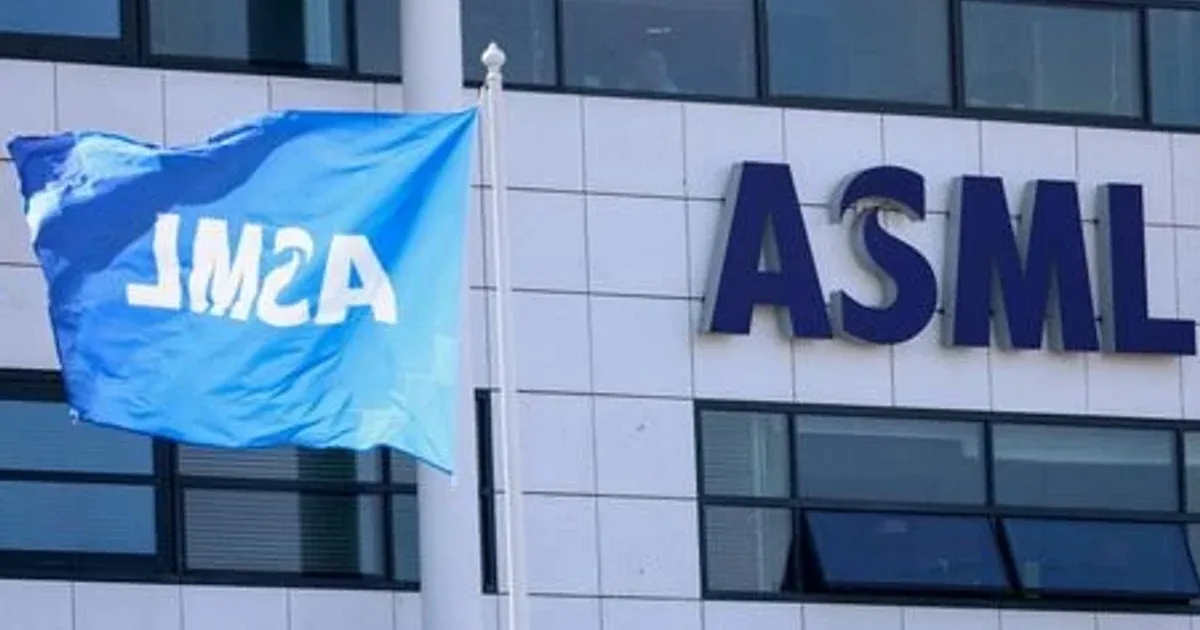
ASML, Europe’s most valuable tech company, is entering its earnings season amid soaring demand for advanced semiconductor manufacturing equipment driven by artificial intelligence developments. The Dutch firm’s extreme ultraviolet (EUV) lithography machines, critical for producing cutting-edge chips, are under immense pressure as customers accelerate capacity expansion plans for 2026 and beyond.
Despite robust growth, ASML’s supply chain faces challenges. Building EUV machines takes months, and the company is expediting assembly and upgrading existing tools to prevent bottlenecks reminiscent of those during the pandemic. Major clients such as TSMC, which supplies chips for firms like Nvidia, Intel with its revival efforts, and Elon Musk’s TeraFab initiative, all add to the intensity of demand on ASML’s production capabilities.

Financially, ASML reported strong first-quarter results, including net sales of €8.8 billion and a net income of €2.8 billion. The company raised its revenue forecast for 2026 to between €36 billion and €40 billion while maintaining an expected gross margin range of 51% to 53%. Second-quarter sales are projected between €8.4 billion and €9.0 billion.
However, the firm must also navigate geopolitical tensions and export regulations, particularly U.S.-led restrictions targeting advanced semiconductor tools sales to China. While ASML does not export its most sophisticated EUV systems to China, the country still represents a substantial revenue component—accounting for roughly one-third of 2025 sales—largely through sales of less advanced deep ultraviolet (DUV) lithography systems. Chinese purchases could reach up to 20% of ASML’s 2026 revenue through these legal channels.
Emerging U.S. legislation aims to tighten export controls further by requiring allied nations to enforce similar restrictions on China’s access to advanced chipmaking technologies. ASML is explicitly referenced in these legislative efforts, underscoring its strategic role in the semiconductor supply chain and the geopolitical challenges it faces.
Amid these dynamics, ASML announced a strategic partnership with Tata Electronics to bolster India’s semiconductor ecosystem, signaling a move to diversify production support and expand collaboration beyond traditional markets.