

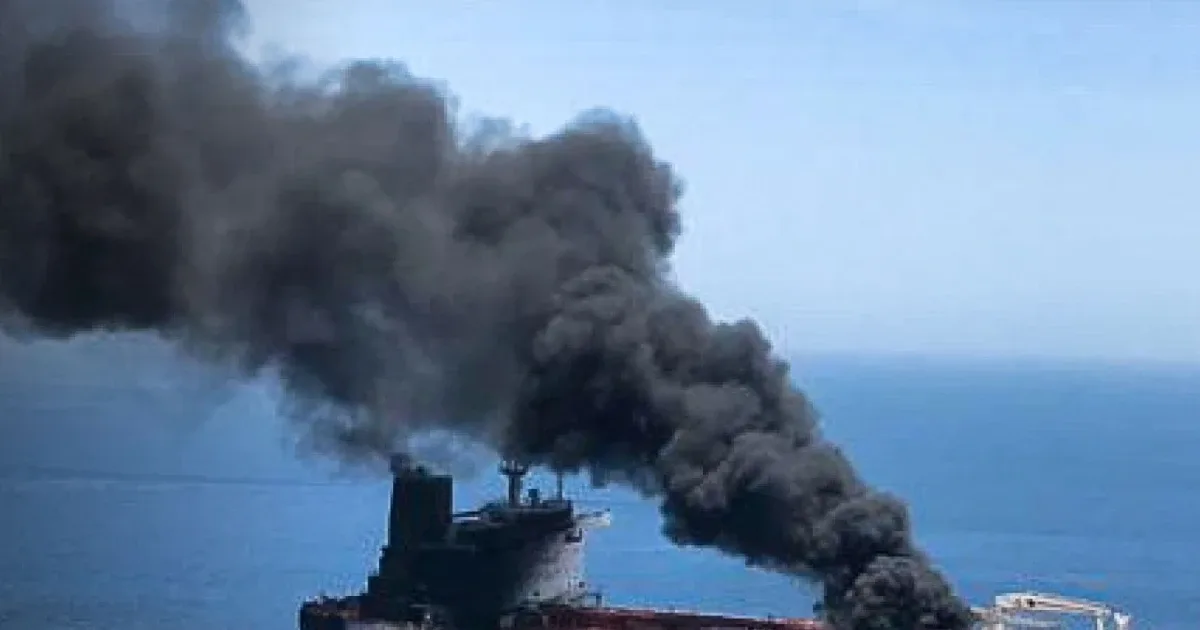
A deadly attack on a tanker near the Strait of Hormuz has escalated tensions between the United States and Iran in a region responsible for transporting about one-fifth of the world’s oil. The United Arab Emirates confirmed one fatality following the incident, which occurred amid growing military confrontations between the two nations near this crucial maritime chokepoint.
US and Iranian forces have exchanged attacks in and around the strait, heightening fears of a broader shipping crisis. The United States employed one-way attack sea drones in combat for the first time, targeting Iranian military assets, including an Iranian submarine and a ship facility. These assaults, supplemented by attacks from unmanned speedboats, reflect a deepening conflict within the vital sea lane that moves Persian Gulf crude oil to global markets.

Washington and Tehran both assert control over the Strait of Hormuz, a narrow waterway whose strategic importance lies in its role as a critical artery for energy exports. The renewed hostilities were formally acknowledged by a notification from US leadership to Congress, marking the reopening of a 60-day congressional authorization for military operations without further approval. This development solidifies the military campaign’s legal framework amid intensifying clashes.
Maritime conflict in this region is not new. Historical parallels include the 1980s Iran-Iraq Tanker War, where commercial vessels became targets of warfare. More recently, in 2019, a series of sabotage incidents damaged several commercial ships, including the Panama-flagged Kokuka Courageous and the Front Altair. Additionally, seizures of Iranian oil tankers by international naval forces underscored the continuing volatility surrounding energy shipments.
The Strait of Hormuz’s strategic role means that any attack has immediate ramifications for global oil supply chains, shipping insurance, and energy markets. It also risks drawing regional and international naval powers deeper into conflict. With each exchange of fire, the likelihood of broader escalation grows, affecting not only the countries involved but also the stability of international trade routes dependent on this narrow passage.