

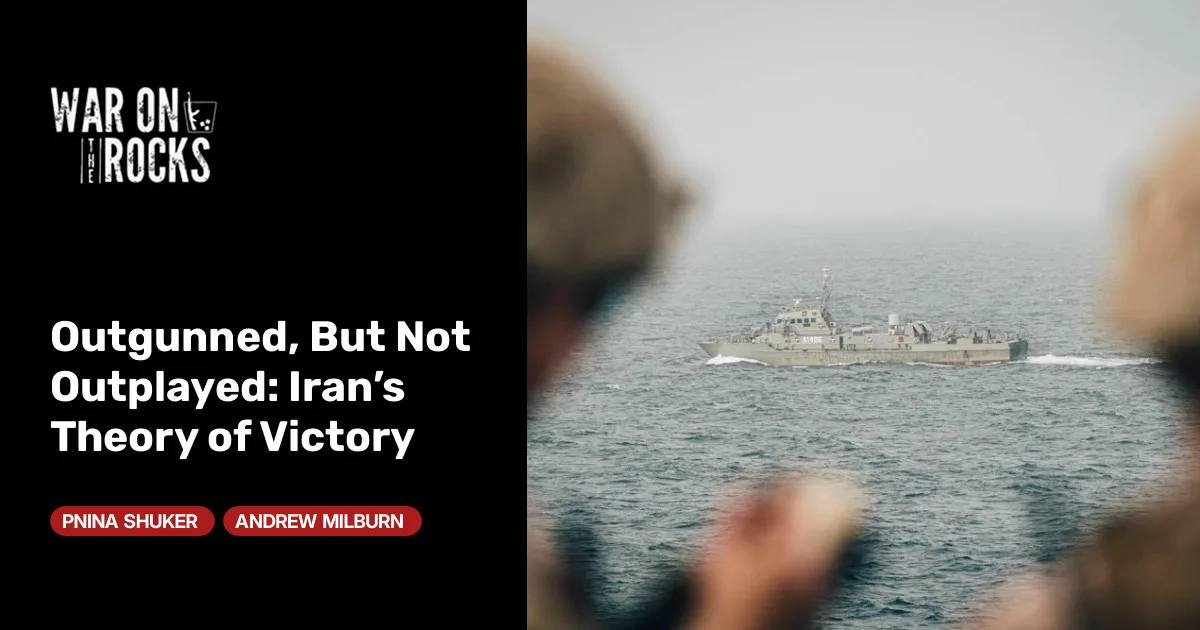
Iran’s conflict with the United States defied conventional expectations of military dominance. Rather than relying solely on battlefield victories, Tehran executed a long-term strategy that transformed its perceived vulnerabilities into diplomatic and geopolitical gains. While powerful military forces aimed to incapacitate Iran quickly, the Islamic Republic focused on survival, decentralization, and influence, ultimately dictating the terms of peace.
This approach hinged on a doctrine known as the “mosaic defense,” developed over two decades within the Islamic Revolutionary Guard Corps. It empowered regional commanders with autonomous decision-making in a fragmented command structure designed to endure and adapt to crippling strikes. As hostilities began, Iranian officials openly acknowledged learning from U.S. military setbacks in neighboring regions, applying those lessons to their own strategic posture.

The U.S. and its allies approached the conflict anticipating traditional warfare, emphasizing high-value target attacks and technological superiority. In contrast, Iran exploited less conventional avenues, including the critical shipping lanes in the Gulf, where it imposed toll-like controls that affected global commerce and asserted influence in Iraq by positioning itself as the defender of Muslim resistance against American intrusion.
Meanwhile, Gulf states that faced sustained Iranian missile and drone assault adjusted their stance, even sending condolence delegations to Tehran—an indicator of shifting regional power perceptions. Iran’s actions blurred the lines between military engagement and political maneuvering, embodying classic principles articulated by 19th-century strategist Carl von Clausewitz that war constitutes politics by other means.
Key to Iran’s advantage was its ability to convert military inferiority into geopolitical leverage. By decentralizing command and making the conflict more protracted and complex, Tehran avoided the decisive defeats that its enemies sought. This strategy culminated in a ceasefire negotiated from a position of newfound strength, countering the narrative of an inevitable U.S. victory.
The outcome underscores the failure of Washington and Jerusalem to recognize the nature of the conflict Iran intended to fight. While conventional military might defined their approach, Iran adeptly merged military tactics with political strategy and economic influence, paving the way for a fragile but advantageous peace settlement.