

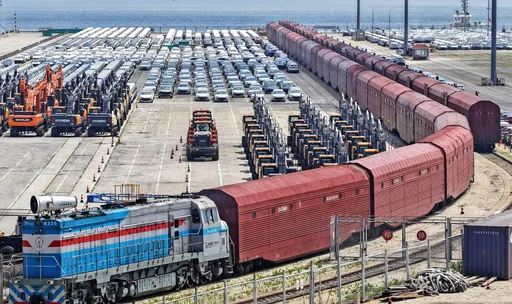
China’s export sector saw a significant boost in June as shipments rose 27% compared to the same month last year, outpacing economists’ forecasts and continuing a robust trend in foreign demand. This surge was largely attributed to increased global appetite for artificial intelligence (AI) related products, especially semiconductors, which have experienced sharp price spikes.
Imports also expanded strongly, climbing 36% year-on-year, surpassing May’s 27.4% increase. Analysts noted that geopolitical tensions, including the Iran conflict, played a role by pushing up global import costs. The rapid rise in trade values contributed to a widening trade surplus of $125.6 billion, growing from $105.4 billion in May, signaling strong external demand despite challenges in China’s domestic economy.

The boom in AI technology has driven Chinese exports of vehicles, particularly electric vehicles (EVs), and tech equipment that rely heavily on semiconductors and electronic components. This export strength has helped offset sluggish domestic factors, including a persistent downturn in the property sector and weak consumer spending. For the first half of the year, exports rose 17.6%, while imports surged 26.6%, underlining an ongoing uptrend in China’s trade activity.
China’s trade dynamics have also shifted in response to growing trade tensions with major economies such as the United States and Europe. In an effort to circumvent tariffs and regulatory barriers, many Chinese manufacturers are relocating production facilities to Europe and diversifying export destinations. Significant growth in shipments has been recorded to Southeast Asia, Latin America, and Africa, with exports rising nearly 35%, 28%, and showing steady increases respectively.
Exports to the European Union grew over 18%, and shipments to the United States increased by approximately 14%. The rebound in U.S.-bound exports follows a period of decline related to higher tariffs introduced last year under renewed trade policies. However, experts warn that continued export growth remains fragile and closely tied to global economic conditions and regulatory developments.
China’s economic planners have set a cautious growth target around 4.5% to 5% for the year, slightly lower than the previous year’s 5%. The International Monetary Fund recently adjusted its forecast upward to 4.6% for 2026 but expects slower growth of 4.1% in 2027. To bolster domestic consumption, Chinese authorities have introduced measures such as trade-in incentives for automobiles and appliances, aiming to stimulate spending amid ongoing economic headwinds.