

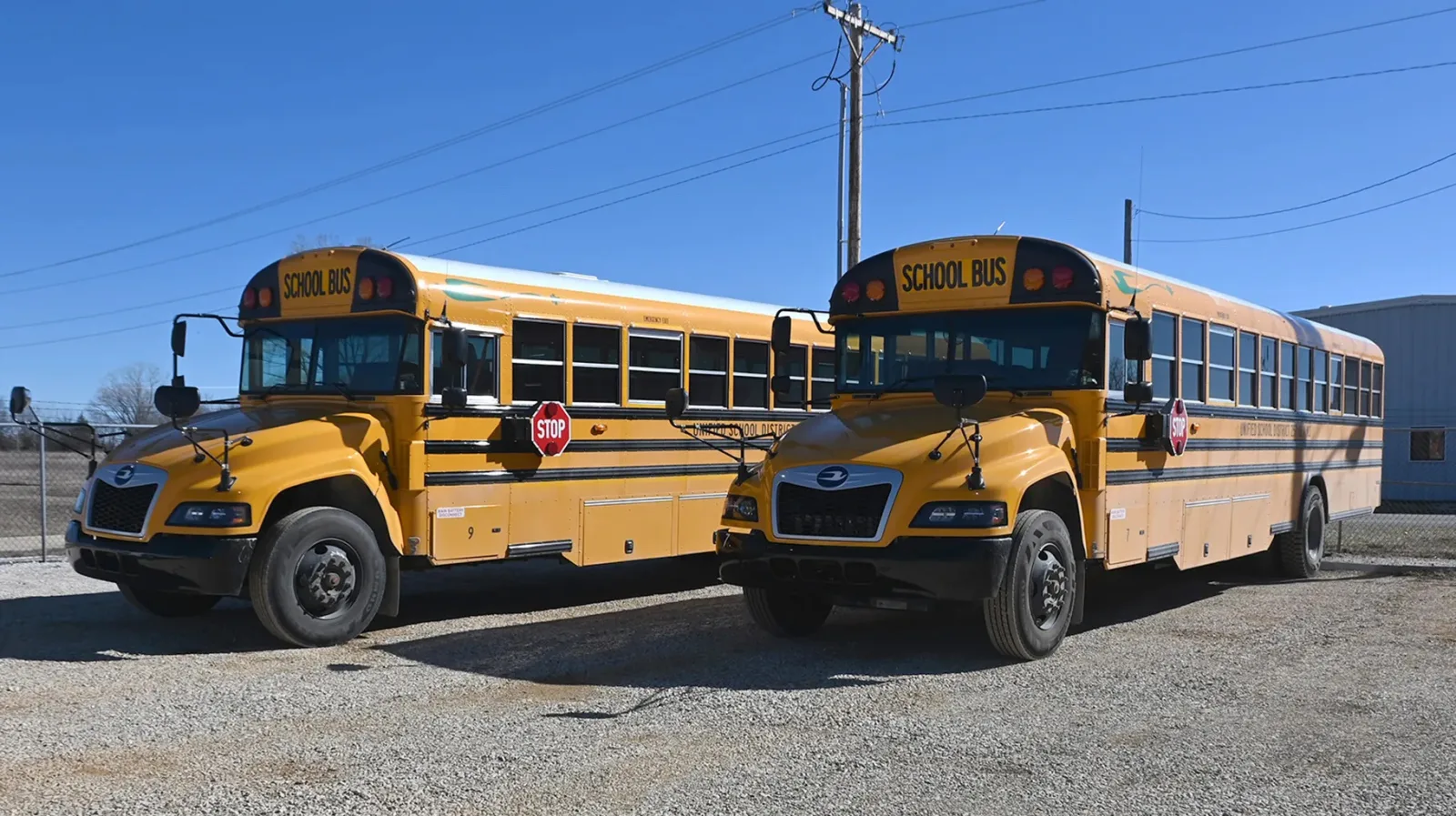
USD 257 school district has found a practical solution to soaring fuel prices by integrating electric buses into its fleet, significantly lowering transportation costs. The district operates two electric buses on regular routes, which cost roughly half as much to run compared to their diesel counterparts, according to the director of operations, Aaron Cole.
With fuel costs climbing due to global factors such as instability around the Strait of Hormuz, diesel prices have hit near-record highs impacting many sectors reliant on diesel-powered vehicles—including school transportation. For USD 257, a typical diesel bus consumes about $20 in fuel daily over a 50-mile route, while electric buses require around half that amount in electricity.

The district’s two electric buses entered service after securing a $690,000 grant from the Environmental Protection Agency’s Clean School Bus Program, funded under the Bipartisan Infrastructure Law. This investment included the purchase of a dual charging station, enabling the district to maintain its electrified fleet efficiently.
Cole estimates the district saves hundreds of dollars annually on fuel costs alone with these electric buses. Currently, the district runs a mixed fleet of diesel, gasoline, and electric vehicles, with gasoline-powered buses and a van supplementing routes not covered by the electric buses.
This shift not only eases financial pressure but also reflects growing trends toward sustainable school transportation, as districts nationwide seek to mitigate the impact of fluctuating fuel prices on their budgets.