

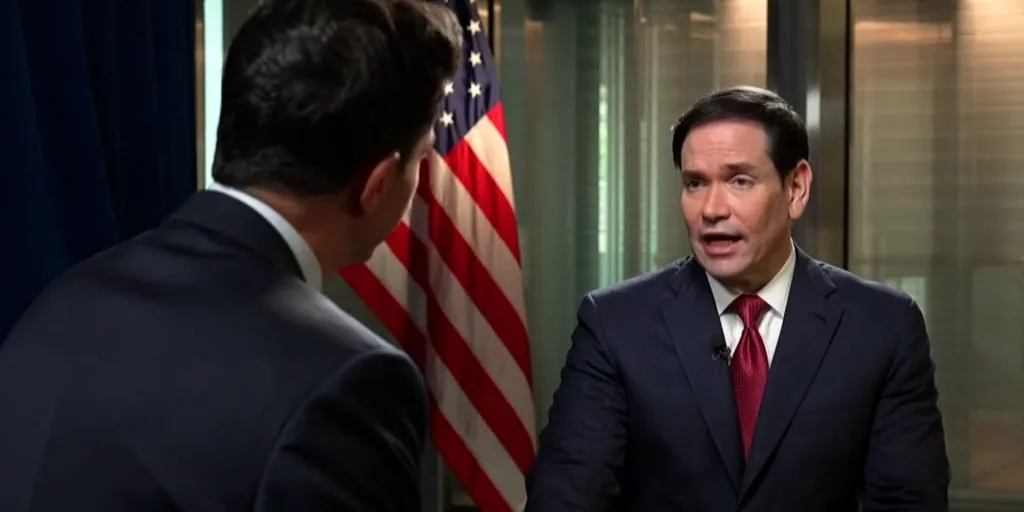
Senator Marco Rubio rejected the notion that the United States is relying on China for help in managing tensions with Iran. Speaking in the context of growing global geopolitical frictions, Rubio stressed that Washington maintains its own independent strategy regarding Iranian matters.
This statement comes amid heightened scrutiny of China’s expanding influence in Middle Eastern affairs. Various officials have expressed concerns about Beijing’s role as a potential mediator or power broker in the region, particularly as talks surrounding Iran’s nuclear program and sanctions remain deadlocked.

Rubio’s comments reflect a broader apprehension within US political circles about the shifting balance of power and the possibility of China leveraging its position to reshape diplomatic outcomes in ways that could undercut American interests. While some voices argue that cooperation with China might restart stalled negotiations with Tehran, Rubio and others insist that the US effort should proceed without reliance on Beijing.
His remarks also touched implicitly on recent discussions suggesting that the Trump administration considered broadening business engagements with China during official trips, underlining an ongoing tension between commercial interests and national security priorities. As the US weighs its approach toward Iran and China simultaneously, Rubio’s position signals a desire to maintain a firm stance without external dependency.
This debate unfolds against a backdrop of contentious international negotiations, where the United States aims to counter Iran’s nuclear ambitions without escalating regional conflict or conceding influence to rival powers. Rubio’s clear rejection of Chinese involvement adds a significant voice to the ongoing discourse on how best to manage these complex interstate dynamics.