

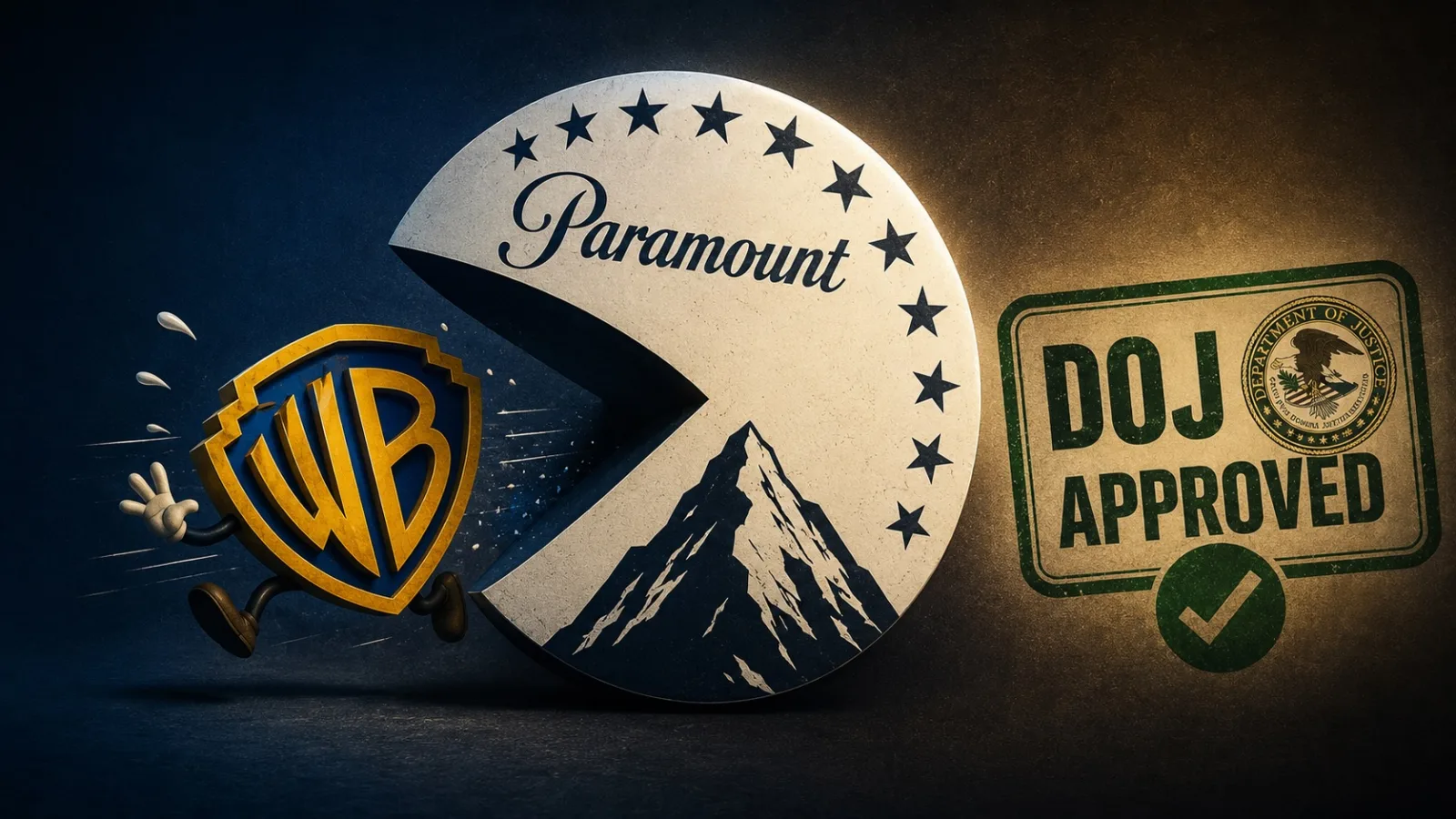
The US Department of Justice’s Antitrust Division has granted unconditional approval for Paramount Skydance’s acquisition of Warner Bros. Discovery, marking a critical regulatory milestone for what would be one of Hollywood’s largest studio consolidations. Despite this federal green light, significant hurdles remain as state officials and international competition authorities continue to examine the deal.
Shortly after the federal clearance, California’s Attorney General, Rob Bonta, announced his office’s ongoing investigation and indicated potential legal action or negotiations to impose conditions on the merger. Bonta’s announcement signals that the approval does not spell the immediate end of opposition, especially with other states reportedly interested in joining a multistate challenge. This echoes his recent involvement in an antitrust suit against Nexstar Media Group, showing his willingness to confront major corporate mergers on competitive grounds.

Behind the scenes, reports reveal internal divisions within the Justice Department. While career staffers spent months leaning toward recommending a lawsuit to block the merger, fearing it would reduce competition between two major studios, the final approval appears to have overridden those concerns. This divergence between career investigators and the final ruling underscores the complexity and contentiousness of the case.
Beyond the US, international regulators remain vigilant. The European Commission has set a preliminary deadline to decide whether to clear the deal or open a more extensive inquiry, while the UK’s Competition and Markets Authority plans to announce if it will launch a Phase 2 investigation soon. These global reviews add layers of uncertainty as Paramount Skydance must complete the acquisition by a specific date this year to avoid penalties.
The merger would unify Warner Bros., New Line Cinema, HBO Max, DC Studios, and CNN with Paramount, Paramount+, and Skydance under one corporate umbrella, altering the competitive landscape of the film and television industry. The process to reach this point has been marked by strategic bidding wars, notably with Netflix initially favored by Warner Bros. Discovery’s board, and now culminates in a regulatory approval fraught with ongoing legal and political challenges.