

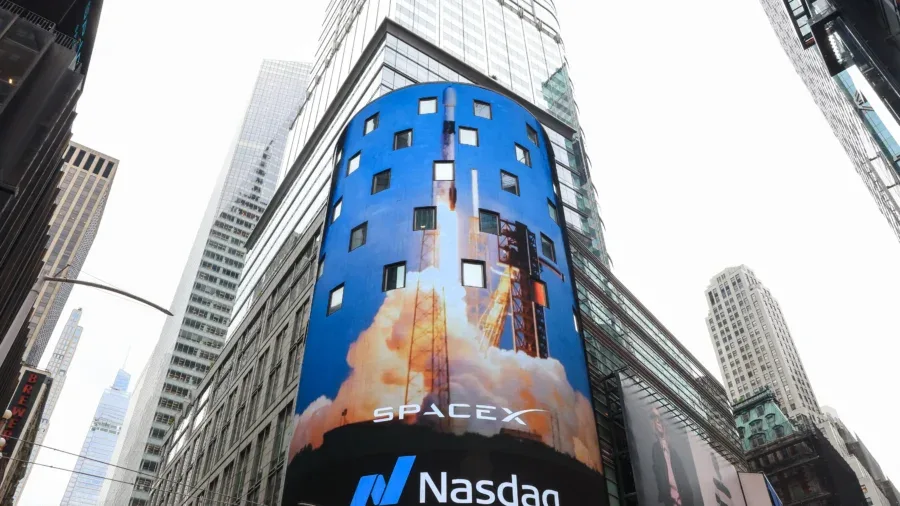
SpaceX concluded its initial public offering with nearly $86 billion raised, setting a new record for the largest IPO ever. This total includes an additional purchase of 83.3 million shares by underwriters through a greenshoe overallotment, a move often triggered by strong market demand shortly after the stock’s debut. The offering initially raised $75 billion before the overallotment expanded the proceeds to $85.7 billion.
The company’s shares made a significant leap on their first day of trading on Nasdaq, surging nearly 20 percent from an opening price of $135 to around $161. As trading continued, SpaceX’s market valuation climbed further, nearing $180 per share and pushing the valuation beyond $2.3 trillion during the initial week. This robust performance underscored sustained investor enthusiasm rather than early profit-taking.

Among prominent investors, Baron Capital notably increased its stake, acquiring an additional $1 billion in shares, bringing its total investment to approximately $25 billion. The firm expressed optimism about SpaceX’s growth potential, projecting the company could reach a valuation of up to $40 trillion within the next decade driven by its advancements in satellite technology, rocketry, and network infrastructure.
Similarly, the richest individual in Australia, Gina Rinehart, invested through her mining company, Hancock Prospecting. The company obtained an undisclosed stake in SpaceX, highlighting the IPO’s oversubscription and popularity. Rinehart praised SpaceX’s ability to transform futuristic concepts into tangible businesses, marking the investment as a strategic move to support innovation and maintain technological leadership.
Market analysts interpreted SpaceX’s successful IPO as a broader endorsement of technology and innovation-driven companies. The ability to price and sell such a massive offering, coupled with a strong aftermarket rally, signals growing investor appetite for transformative enterprises harnessing advanced technologies.