

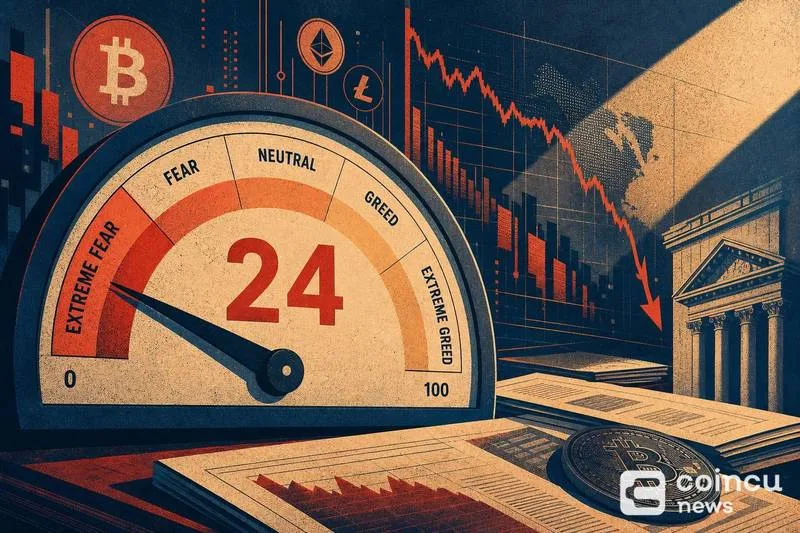
The Crypto Fear & Greed Index recently fell to 24, marking a significant level of extreme fear among cryptocurrency traders. This low reading reflects a defensive approach in the market, where participants are increasingly risk-averse, often resulting in more selling than buying activity. The index operates on a 0-to-100 scale, with 0 representing maximum fear and 100 maximum greed, making the current score well inside the “extreme fear” range.
This index consolidates various data points such as market volatility, momentum, social media sentiment, and dominance patterns to quantify the overall emotional state of crypto investors each day. Although the score is a useful gauge of market mood, it does not directly predict price movements or trend reversals. Markets can remain in sustained periods of extreme fear without immediate recoveries, or they can bounce back abruptly.

The current score of 24 is a marked improvement compared to earlier this year when the index reached 13 during a sharper sell-off, indicating that while sentiment remains poor, the panic is less acute than before.
Market participants often pair Fear & Greed readings with other indicators before making decisions. These include Bitcoin’s price action at important support levels, trading volume trends on key exchanges, and funding rates in the perpetual futures market—negative shifts here often signal caution. Additionally, movements in the U.S. Dollar Index and other currency markets influence crypto sentiment, as dollar strength typically weighs on risk assets like cryptocurrencies. Stablecoin flows into exchanges offer further clues by revealing potential buying interest beneath the surface despite the prevailing fear.
While the Fear & Greed Index is one of the most referenced sentiment tools in the cryptocurrency landscape, it has limitations. It summarizes collective emotions rather than structural factors shaping the markets. Hence, investors should consider it as part of a wider analytical framework instead of a sole signal.