

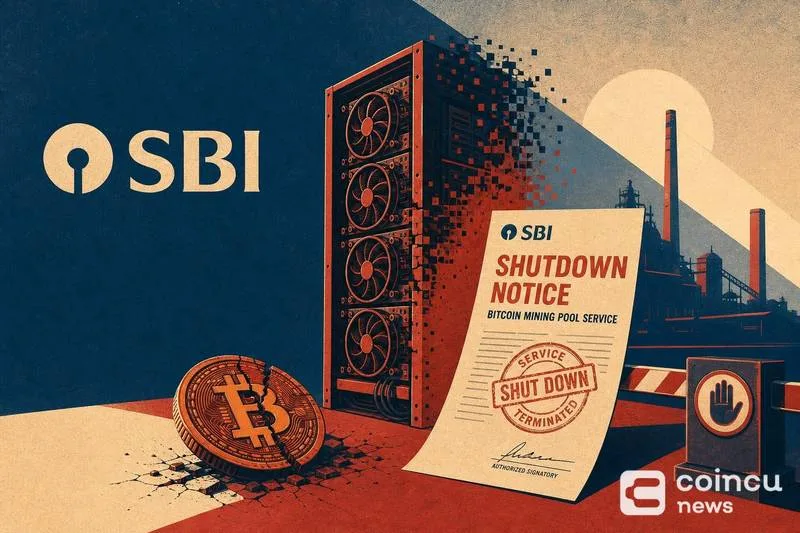
SBI Crypto, the cryptocurrency subsidiary of Japan’s SBI Holdings, announced the closure of its Bitcoin mining pool, a service accounting for around 2% of the entire Bitcoin network’s hashrate. This move removes a modest but established mining operation from Bitcoin’s decentralized infrastructure.
The shutdown means miners currently connected to SBI Crypto’s pool must relocate their operations to other mining pools to maintain block reward earnings. The details regarding the timeline for closure, payout processes, and how miners can access their accrued balances during the phase-out have yet to be clarified by the company.

Miners face practical challenges during this transition, including ensuring pending payments are honored and smoothly migrating hashpower to alternative pools. As SBI Crypto’s pool exits, its share of computational power is expected to redistribute among remaining pools rather than leave the Bitcoin network. This redistribution highlights ongoing trends in mining consolidation, where fewer operators control larger portions of the network’s hashrate.
While this 2% loss is minor in the context of overall network security and block production, it underscores the evolving role of traditional financial entities within the crypto mining sector. Bitcoin’s difficulty adjustment mechanism continues to safeguard network stability, adjusting difficulty levels regardless of changes in mining participation.
Within the broader cryptocurrency landscape, SBI Holdings has been a pioneering Japanese financial institution adopting crypto ventures. However, its exit from direct mining pool operations may mark a strategic shift, possibly focusing more on other aspects of digital asset services rather than infrastructure-heavy mining activities.