

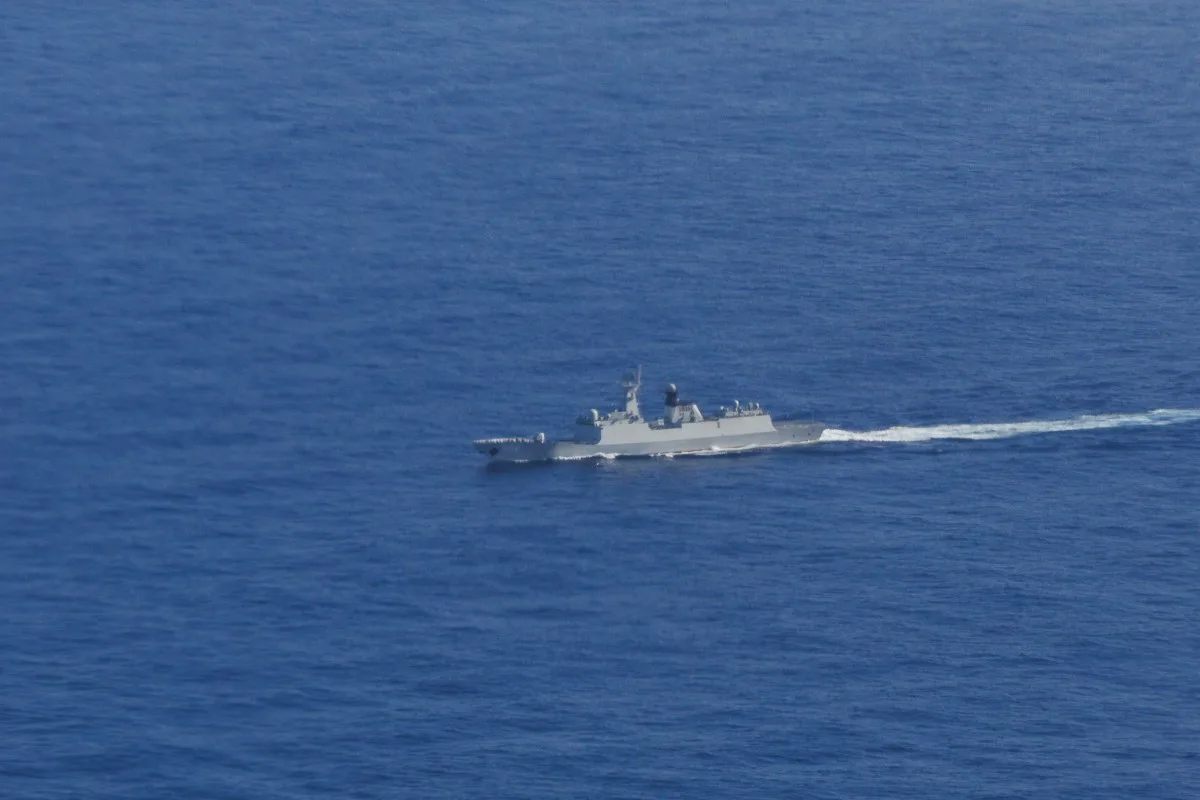
China has developed missile technology capable of striking Australian territory, signaling a strategic expansion of its military reach in the Indo-Pacific region. According to a recent report by Australia’s Lowy Institute, the People’s Liberation Army’s (PLA) rapid modernization and arms buildup are eroding U.S. military supremacy and compelling neighboring countries to navigate increasing pressure from Beijing.
The report highlights that while Taiwan remains the PLA’s primary focus amid rising tensions, China is actively pursuing long-range military power projection. This includes deploying missiles, aircraft, and naval assets that can target Australia, a key U.S. ally in the region. Such capabilities reveal China’s intent to influence regional affairs beyond its immediate vicinity.

The missile threat is particularly acute. China already possesses conventional missiles, such as the DF-26 intermediate-range ballistic missile, capable of reaching northern Australia when launched from artificial islands in the South China Sea. More concerning is the newer DF-27 missile, reportedly in service with an estimated range of up to 5,000 miles. This weapon can potentially cover the entire Australian landmass when fired from the Chinese mainland, marking a significant escalation in strategic reach.
The report outlines several possible Chinese military tactics in a hypothetical conflict involving U.S.-Australia cooperation. These range from targeted strikes on offshore oil infrastructure as warnings, cyber or missile attacks on critical public infrastructure to exert political pressure, and assaults on government facilities aimed at destabilizing Australia’s leadership. The authors emphasize that China’s growing military presence creates a structural challenge to regional stability, even if direct attacks on Australian soil remain uncertain.
China’s Foreign Ministry responded to the report by reaffirming its commitment to peaceful development, asserting that its military enhancements are defensive and not directed at any country. The ministry spokesperson described China’s military growth as reinforcing global peace, reflecting Beijing’s official stance amid increasing strategic tensions.
While the report sets aside China’s nuclear arsenal from its immediate analysis, it notes that China’s stockpile of nuclear warheads, currently estimated at around 620, could triple by the middle of the decade. This expansion occurs alongside a defense budget that has roughly doubled, underpinning China’s broad military modernization efforts.