

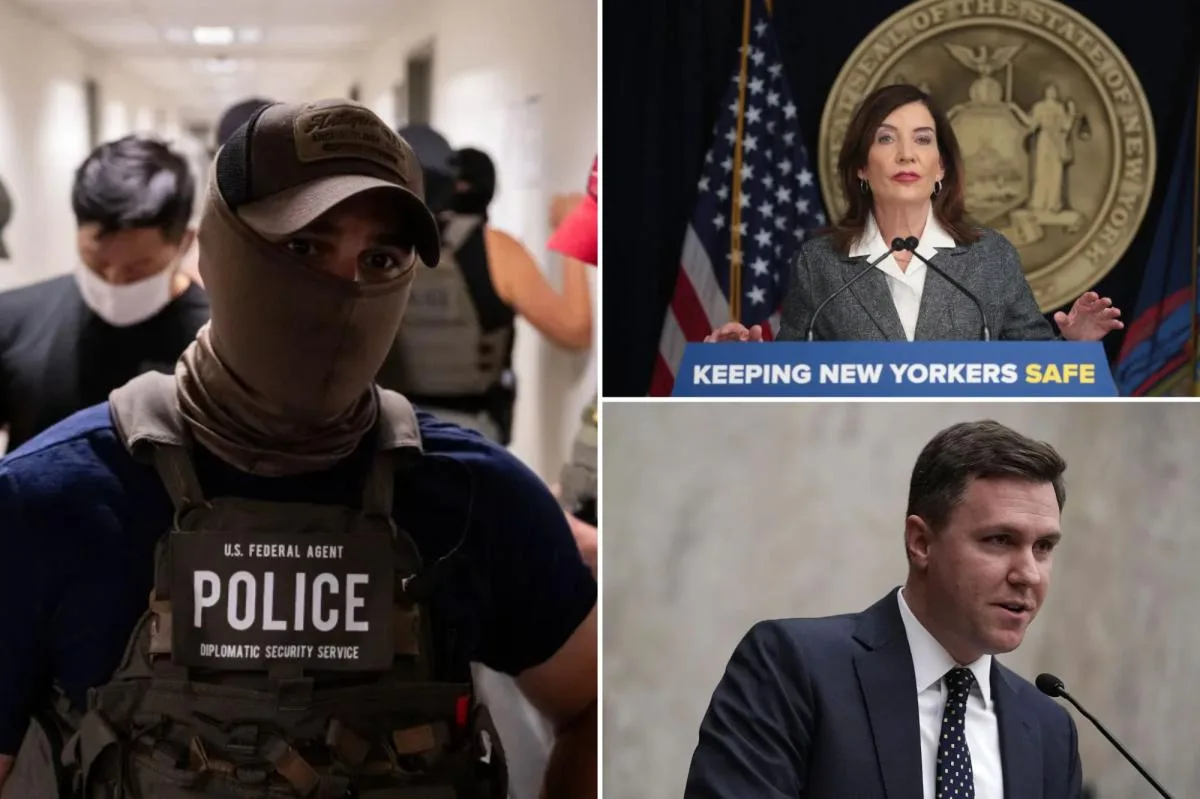
The Department of Justice (DOJ) has initiated legal action against New York to block a state law that forbids federal agents from wearing masks during law enforcement operations. The lawsuit argues that this restriction exposes agents to harassment, tracking, intimidation, and potential physical assaults, undermining their ability to perform their duties safely.
Filed in federal court in Buffalo, the complaint focuses on provisions embedded in New York’s annual budget, which the DOJ alleges were inserted without proper consideration and violate the Supremacy Clause and intergovernmental immunity guaranteed by the U.S. Constitution. Under this law, agents from Immigration and Customs Enforcement (ICE), the Drug Enforcement Administration (DEA), and other federal agencies would face criminal penalties for mask-wearing once the law takes effect.

Beyond the mask restrictions, the lawsuit highlights additional measures requiring local governments to terminate enforcement cooperation agreements with federal authorities. This, the DOJ contends, hampers federal efforts to investigate and disrupt criminal activity effectively.
The Department points out that concealing agents’ identities is critical not only during covert operations but also in overt actions to protect future investigations. The suit notes the growing trend of publicizing personal information of federal officers online, including photographs and videos, often aimed at intimidation and harassment from criminal groups such as MS-13 and Tren de Aragua, as well as from rioters and illegal immigrants.
DOJ officials emphasize that safeguarding the privacy and security of federal law enforcement personnel is essential for effective enforcement and public safety. The lawsuit joins similar challenges the DOJ filed in other states and jurisdictions—including California, Virginia, New Jersey, and Philadelphia—all of which have enacted sanctuary policies restricting cooperation with federal immigration enforcement and impose bans on facial coverings for federal agents.
In response to the lawsuit, the DOJ underscored that state governments cannot dictate the operational procedures of federal officers, especially when it compromises their safety during critical law enforcement missions.