

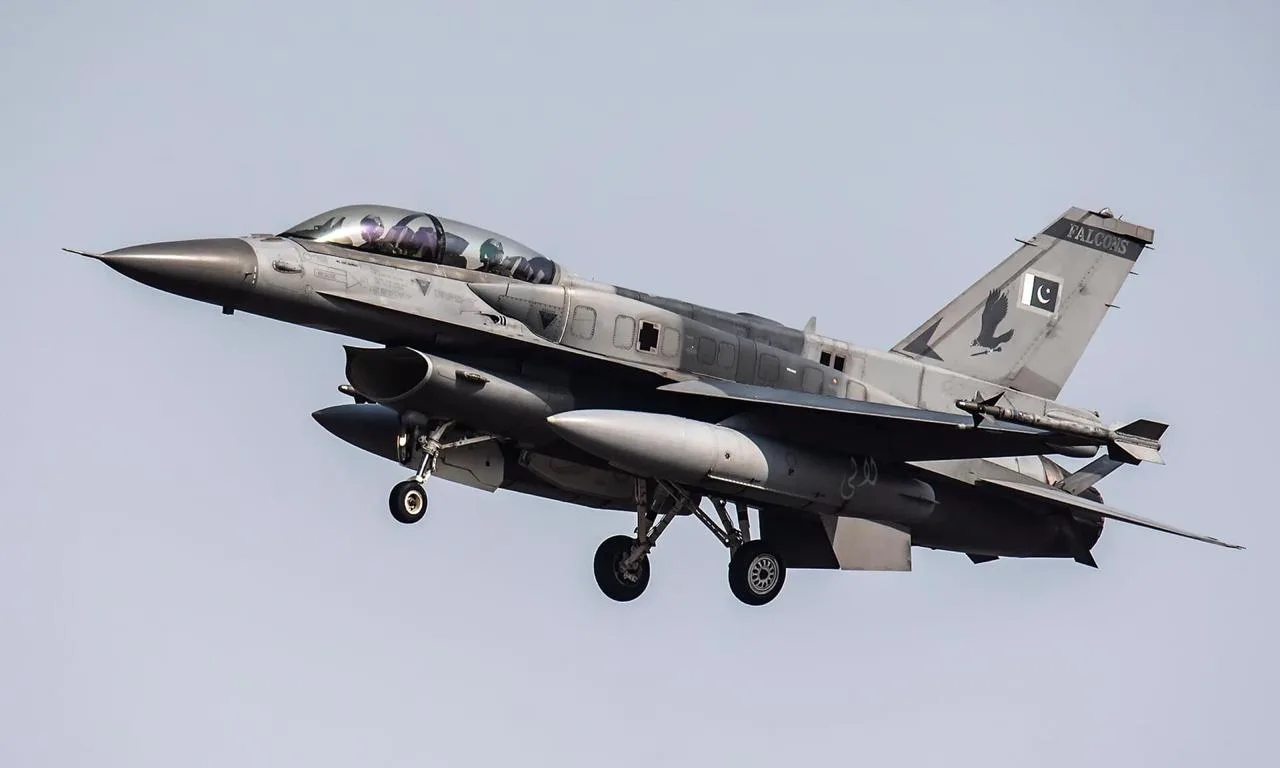
U.S. military technology intended for allied Pakistan has become a conduit for China to deepen its understanding of advanced Western systems—without resorting to direct theft. The true risk lies in sustained, institutionalized access rather than outright espionage, posing strategic challenges for India amidst shifting Indo-Pacific alliances.
While Washington has promoted India as a key strategic partner in the region, reinforcing defense cooperation under a long-term framework, it simultaneously sustains Pakistan’s F-16 combat ecosystem through extensive support. This includes not only spare parts but cutting-edge upgrades such as Link 16 tactical data links, cryptographic systems, avionics, secure communications, simulators, and training—elements essential for networked warfare interoperability.

Link 16 is more than a communication system; it is the battlefield’s lifeline. It integrates aircraft, ships, ground forces, and command centers into a cohesive operational picture, coordinating identification, tracking, targeting, and engagement in near real time. Maintaining and updating this system inherently exposes operational rhythms and technical nuances that can be studied and replicated.
Chinese engineers and analysts benefit from this exposure without possessing the actual aircraft. By observing maintenance routines, software updates, system failures, and operational behavior in Pakistani units, they build a comprehensive understanding of Western military networks. These insights include electronic signatures, cyber vulnerabilities, radar limitations, weapons system tactics, and doctrinal patterns.
In Beijing, this intelligence is systematically cataloged and industrialized, feeding into China’s broader strategy of technology acquisition via diverse channels such as research cooperation, supply chains, reverse engineering, cyber operations, and civilian markets. This approach has propelled advances across various fields, including aerospace, telecommunications, artificial intelligence, and defense.
The U.S. provision of a substantial support package aimed at extending the life and capabilities of Pakistan’s F-16s underscores a complex dynamic. While intended to maintain safety and interoperability within allied forces, it also risks reinforcing China’s ability to decode and potentially counter Western military advantages. India, positioned as a strategic counterbalance to China, views this as an inherent contradiction, exposing regional security vulnerabilities rather than neutralizing them.