

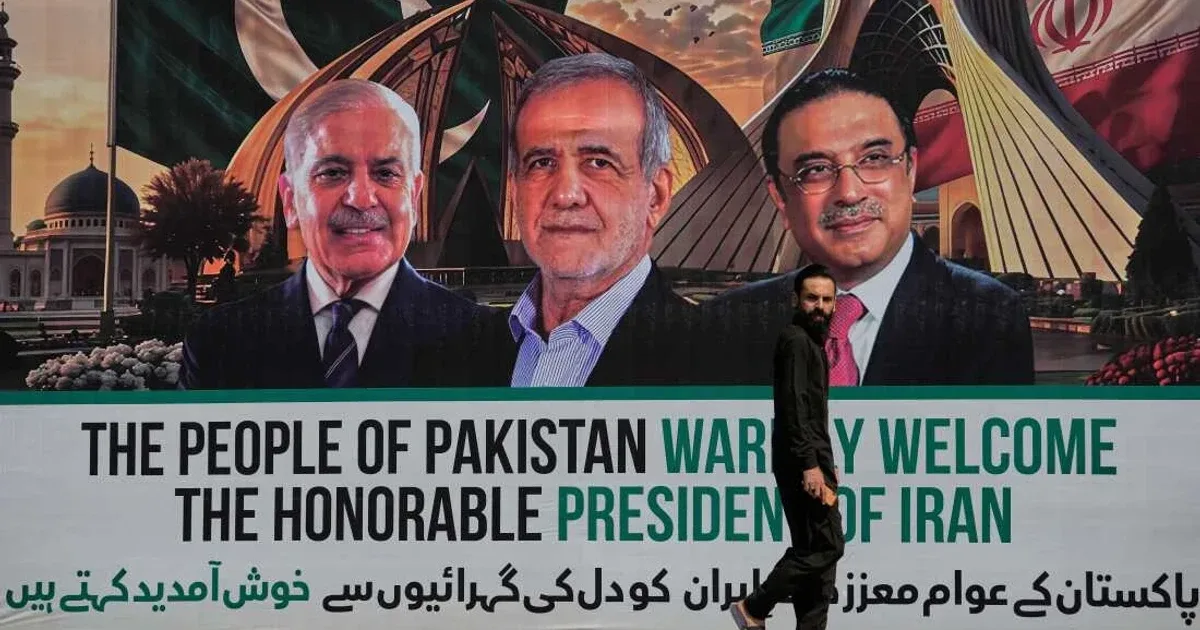
Iran’s parliamentary speaker Masoud Pezeshkian made his first international trip since the outbreak of regional conflict, visiting Pakistan as Tehran and Washington navigate delicate nuclear negotiations in Switzerland. His visit places Pakistan at the center of efforts to broker a ceasefire and a broader diplomatic settlement between the two adversaries.
Traveling with a senior delegation, Pezeshkian met Pakistan’s Prime Minister Shehbaz Sharif and President Asif Ali Zardari to discuss not only the progress of US-Iran talks but also long-standing bilateral issues such as trade, energy cooperation, border security, and regional connectivity. Islamabad’s Foreign Office confirmed the visit came at the invitation of Pakistan’s premier, reflecting deepening diplomatic ties between the two neighbors.

Pakistan’s role extends beyond hosting Pezeshkian. Reports indicate Islamabad has acted as an intermediary facilitating backchannel communications between Tehran and Washington, feeding into the recent high-level discussions held between the US Vice President and Iran’s parliamentary speaker. This mediation has helped advance the negotiations into a more technical phase, although major challenges remain around inspection access to Iranian nuclear sites. Tehran has publicly rejected any current plan allowing International Atomic Energy Agency (IAEA) inspectors to visit sites targeted by US strikes, contrasting with American claims of an agreed framework for inspections.
The visit also builds on a foundation of growing Iran-Pakistan cooperation dating back to an August agreement that set ambitious goals across science, technology, trade, transportation, and agriculture. Both countries aim to expand bilateral commerce toward a substantial economic target, emphasizing that their relationship balances both strategic security and significant economic interests.
With the nuclear talks poised at a fragile juncture, Pakistan’s continued ability to engage both parties could be instrumental in transforming tentative diplomatic steps into a lasting peace framework. How Islamabad manages these dual roles may help determine whether the current negotiation momentum leads to sustainable regional stability or another temporary break in hostilities.