

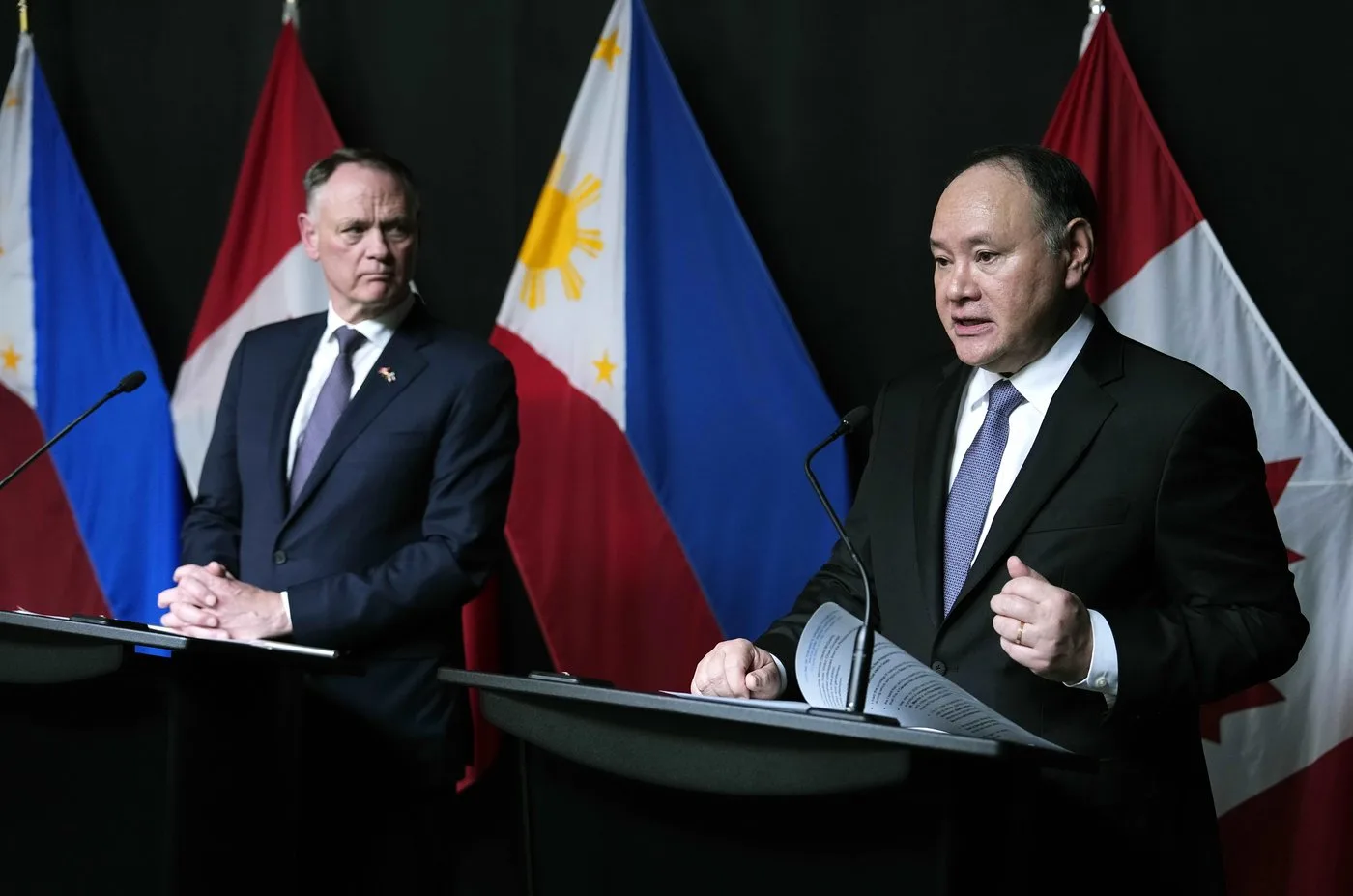
The Philippines and Canada have signed new agreements to enhance defence cooperation and mutual logistics support, signaling a strategic partnership aimed at countering China’s expansive claims in the South China Sea. The move reflects a shared commitment to uphold international law and maintain a free and open Indo-Pacific region.
During a recent visit to Ottawa, Philippine Defence Secretary Gilberto Teodoro Jr. emphasized the importance of this growing alliance, noting that it coincides with efforts to safeguard maritime sovereignty. The two countries’ collaboration includes using Canadian satellite technology to monitor illegal fishing and the movements of Chinese coast guard vessels. Canada's expertise in cybersecurity also plays a crucial role, helping the Philippines strengthen its cyber defence capabilities as part of Canada’s broader Indo-Pacific strategy.

Canada’s Defence Minister David McGuinty highlighted that the partnership is grounded in democratic values and shared respect for the United Nations Convention on the Law of the Sea (UNCLOS), which rejected China’s historical claims over much of the South China Sea a decade ago. This ruling remains central to the Philippines’ stance in territorial disputes and is a foundation of their cooperation with Canada and other allies.
Teodoro pointed out that the Philippines is increasingly seen as a frontline state in maritime security, collaborating not only with Canada but with countries such as Japan, New Zealand, Australia, and France. These partnerships aim to reinforce the enforcement of maritime rules and counter attempts to challenge the established legal order in the region.
With a population of approximately 120 million dispersed across 7,600 islands, the Philippines relies heavily on defined maritime zones to support its economy and safeguard future generations. Teodoro criticized China’s expansive claims stretching far beyond its coastline, describing them as unjust and lacking legal basis given the extensive distance from Chinese shores.
Beyond security, the Philippines aims to broaden ties with Canada through a planned presidential visit focusing on trade, tourism, and energy cooperation—including liquefied natural gas exports—to strengthen bilateral economic relations alongside defence ties.