

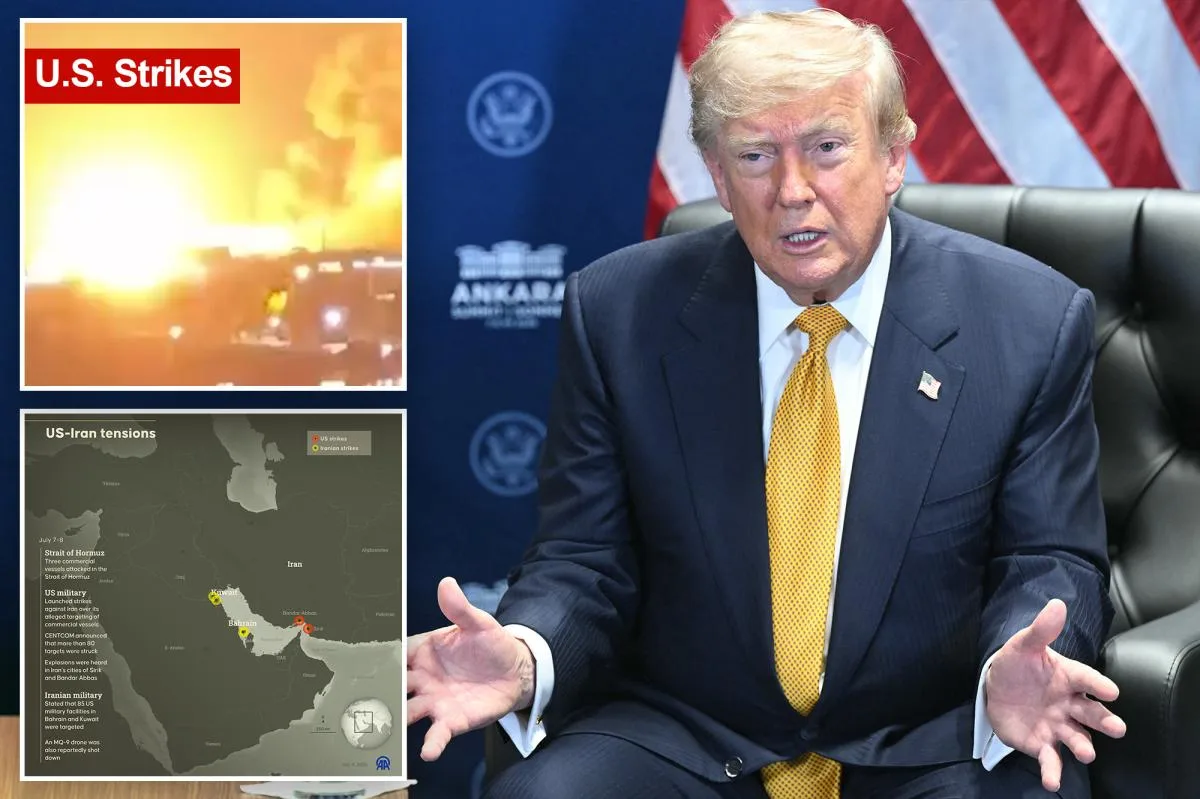
President Trump announced that the tentative peace agreement with Iran is effectively terminated after ordering a series of overnight airstrikes targeting Iranian sites in retaliation for assaults on commercial vessels in the Strait of Hormuz. He characterized Iran’s leadership in harsh terms and expressed his refusal to continue direct negotiations with Tehran.
The memorandum of understanding, signed just weeks earlier, sought to establish a temporary cease-fire and reopen the strategically vital Strait of Hormuz, while addressing Iran’s nuclear program and potential sanctions relief. Recent attacks by Iran on ships navigating the strait, combined with Tehran’s insistence on enforcing a specific maritime route, escalated tensions sharply, prompting the US military response.

In his remarks, Trump criticized what he described as Iran’s duplicity and hostility, calling them “liars,” “cheats,” and “sick people.” He suggested that any further diplomatic efforts would be futile, though he left the door open for negotiators to continue discussions if they chose to do so. The president also cited intelligence reports indicating that Iran has targeted him personally with assassination plots, underscoring the depth of animosity.
Iran’s top negotiator rejected US accusations, asserting that the “era of bullying and extortion” by foreign powers is over and reiterated the country’s refusal to concede to external pressure. The Iranian stance signals continued defiance despite the recent US strikes and political rhetoric.
- The memorandum outlined a 60-day period for reopening the Strait of Hormuz and negotiating Iran’s nuclear program’s fate.
- Iran demanded the use of Tehran-approved maritime routes, conflicting with US preferences for navigation near the Omani coast.
- Airstrikes targeted over 80 Iranian locations following Iran’s attacks on commercial vessels.
The Strait of Hormuz remains a critical chokepoint for global oil shipments, making the security of its waters a persistent flashpoint in US-Iran relations. The abrupt collapse of the cease-fire raises concerns about potential further escalations in the region, where tensions have simmered for years amid competing strategic interests and deep mistrust.