

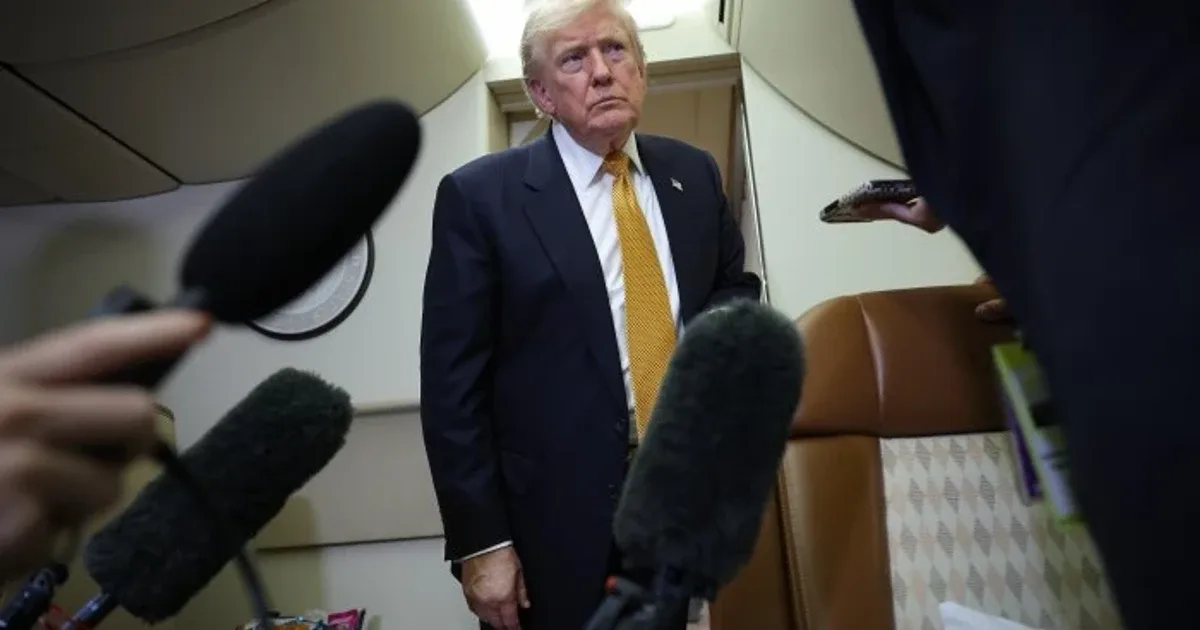
Former President Donald Trump revealed that he set standing orders for the U.S. military to launch a devastating response against Iran if Tehran advanced with an alleged plot to assassinate him. He also indicated that Senator JD Vance would take command decisions if Trump were incapacitated, thrusting a personal security matter into the framework of U.S. military readiness.
The warning followed intelligence reports from Israel indicating that Iranian hardliners harbored intentions to target Trump, though no detailed operational plans were provided. Trump linked this threat directly to the January 2020 U.S. strike that killed Qassem Soleimani, the late commander of Iran’s Islamic Revolutionary Guard Corps Quds Force, emphasizing Iran’s desire for retaliation.

Trump further declared that the United States had “1,000 missiles locked and loaded” against Iran should an assassination attempt occur. This rhetoric coincides with a broader Western alertness to Iran’s malign activities, which several allied governments have condemned through joint statements highlighting plots and hostile operations directed by Iran’s IRGC-Intelligence Organisation, Quds Force, and Ministry of Intelligence and Security across multiple continents.
Recent U.S. sanctions have intensified pressure on Tehran. The Treasury Department targeted an alleged Iranian financier, and the Office of Foreign Assets Control updated Iran-related designations aimed at curbing regime funds for destabilizing actions, ballistic missile development, and the nuclear program. These measures form part of a maximum-pressure campaign designed to restrict Tehran's resources and capabilities.
Meanwhile, diplomatic channels remain partially open as Iranian Foreign Minister Abbas Araghchi conducted talks in Oman, underscoring the complex interplay between confrontation and negotiation that defines current U.S.-Iran relations.