

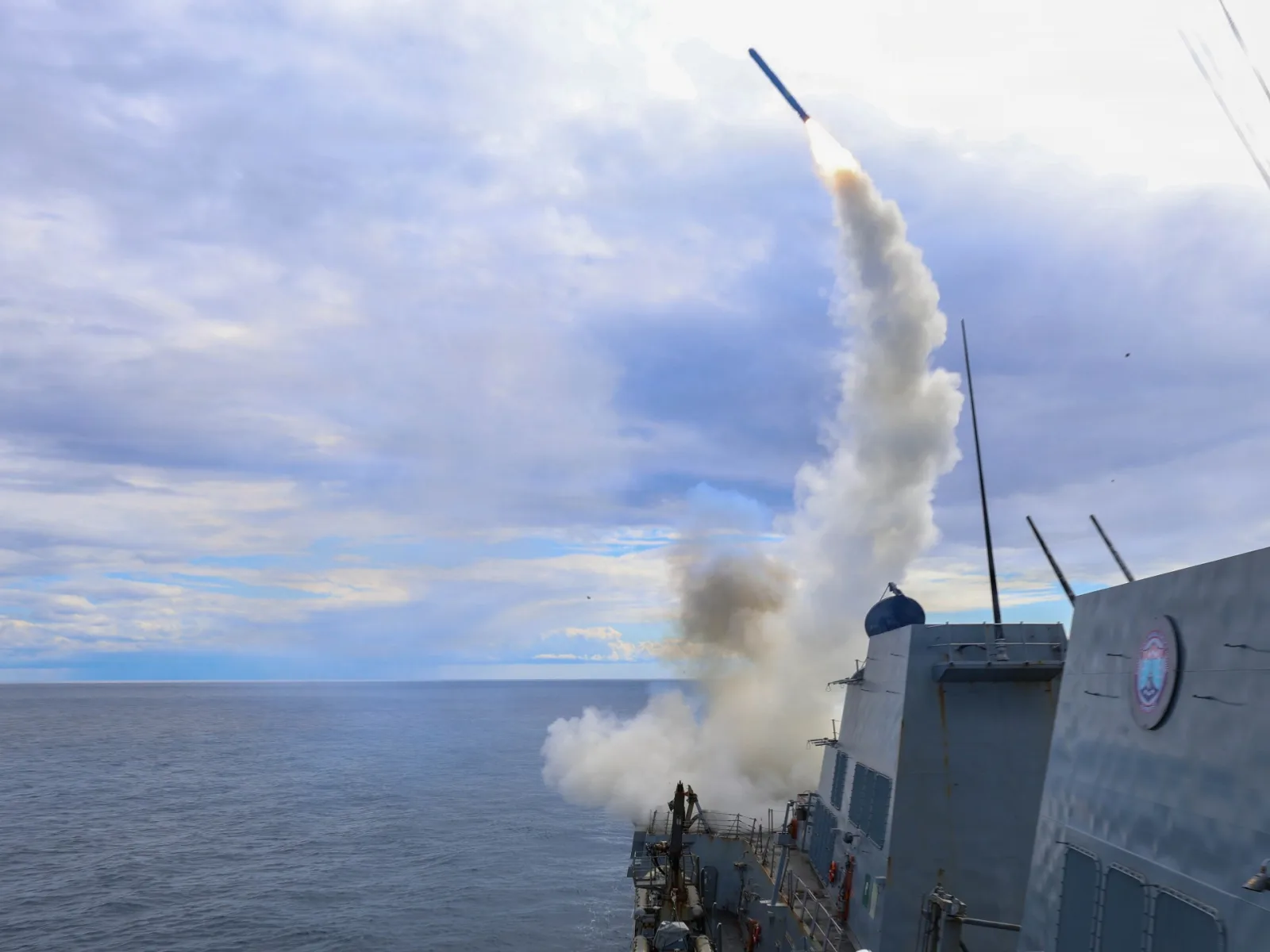
The recent escalation of hostilities between the United States and Iran has severely impacted the US military’s arsenal, with critical munitions depleted to levels that could strain its operational capacity. Since the renewed military offensive against Iran began in late February, the US has expended nearly half of at least four essential weapon categories, driving up billions in costs as stockpiles dwindle amid continuous combat operations.
This depletion coincides with a series of intensive US airstrikes targeting Iranian military infrastructure, including strikes on railway systems and strategic bridges. These operations resumed after Iran attacked commercial vessels navigating the Strait of Hormuz through routes Tehran had not authorized, leading to the breakdown of a ceasefire that had held since April. Heavy US air raids have persisted for consecutive nights, marking a significant intensification of the conflict.

Washington has also reinstated a naval blockade on vessels linked to Iran and reimposed sanctions, signaling a firm stance following the collapse of diplomatic talks. In response, Iran’s Islamic Revolutionary Guard Corps has launched retaliatory strikes against US military installations across the Gulf region, including Bahrain, Oman, Qatar, and Kuwait. These tit-for-tat attacks have resulted in casualties on both sides, escalating regional tensions.
Experts warn that replenishing the depleted munitions stockpile could take months or even years, a pace that could undermine the US military’s preparedness for future conflicts, especially considering the strategic rivalry with China. The strain on resources comes as President Donald Trump prepares to reaffirm US military investments at a defense summit, underscoring the paradox between proclaimed military strength and logistical challenges.
This situation creates a complex dilemma for US defense planners, amid growing public opposition to the Iran conflict and escalating economic pressures at home. The resumption of hostilities and the consequent rapid use of munitions highlight the risks of prolonged military engagements without sustainable supply chains.