

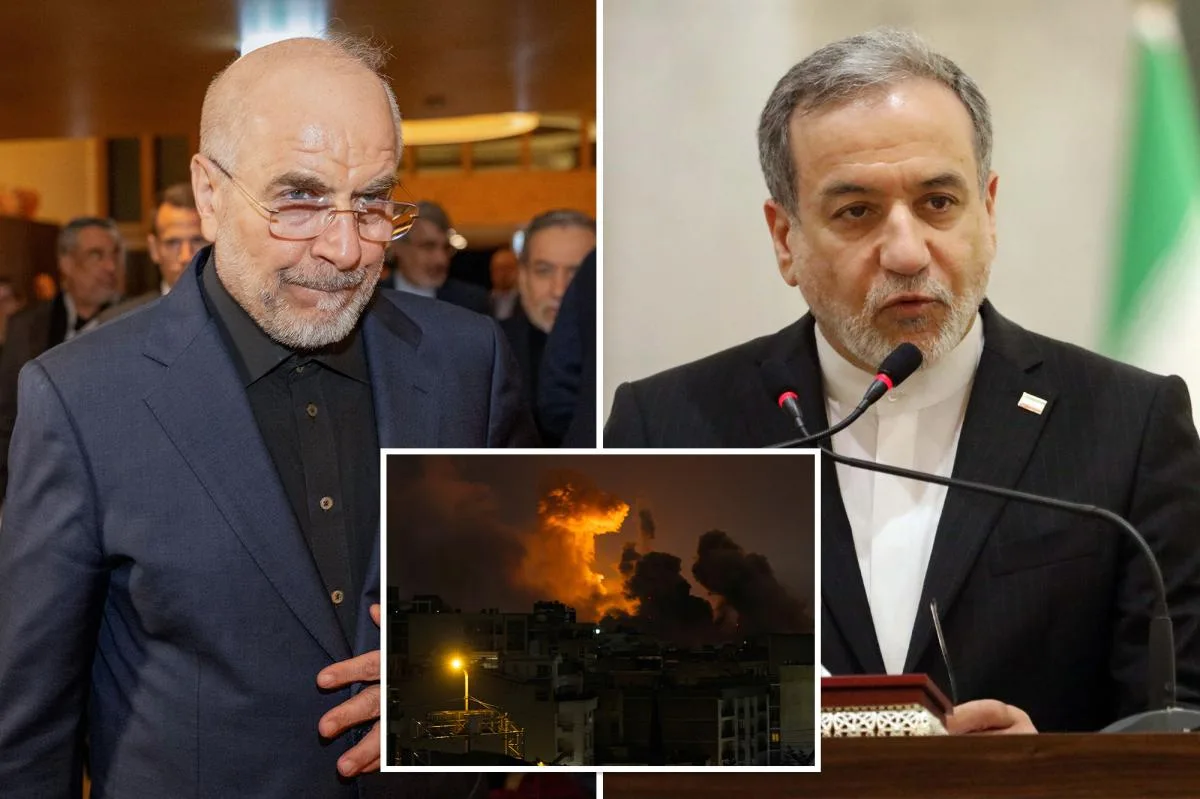
Amid delicate negotiations with the United States, Iran’s leading peace envoys faced credible assassination threats allegedly orchestrated by Israel, prompting the US to intervene by warning Tehran through third-party channels. The Washington-led diplomacy unfolded under the shadow of fears that Israel might disrupt the fragile talks by targeting key Iranian figures, including Foreign Minister Abbas Araghchi and Parliament Speaker Mohammad Bagher Ghalibaf.
Both Araghchi and Ghalibaf had been on an Israeli “kill list” earlier in the year, marking them as prime targets in Israel’s campaign against high-level Iranian officials. Their removal from the hit list coincided with the initiation of US-Iran negotiations, reflecting American efforts to safeguard the peace process. Despite this, US officials remained wary that Israel could still attempt to undermine talks through covert strikes or assassinations.

The apprehension intensified in April during Ghalibaf’s return flight from Pakistan after meeting with the US Vice President, where Iranian security forces reported an Israeli threat to his aircraft. Two Israeli fighter jets were reportedly detected entering Iranian airspace en route to the plane, forcing an emergency landing in Mashhad, Iran. This incident led the delegation to abandon air travel for a lengthy overland journey back to Tehran.
This episode mirrored previous Israeli actions, such as the lethal strike that killed Ali Larijani, Iran’s former top negotiator, earlier in the year, which had previously derailed talks. Both Araghchi and Ghalibaf survived multiple attacks linked to the ongoing conflict, including the 12-day war last year.
US concerns about Israeli interference led Washington to urge several Middle Eastern countries to alert Iran to potential assassination attempts. The intervention aimed to preserve the progress of peace talks by ensuring Iran’s delegation remained unharmed.
Following these tensions, Araghchi and Ghalibaf proceeded to meet US officials in Qatar and later Switzerland, continuing face-to-face negotiations despite the security threats. The US-Iran diplomatic engagement remains fragile, with underlying threats complicating efforts to reach a lasting agreement.