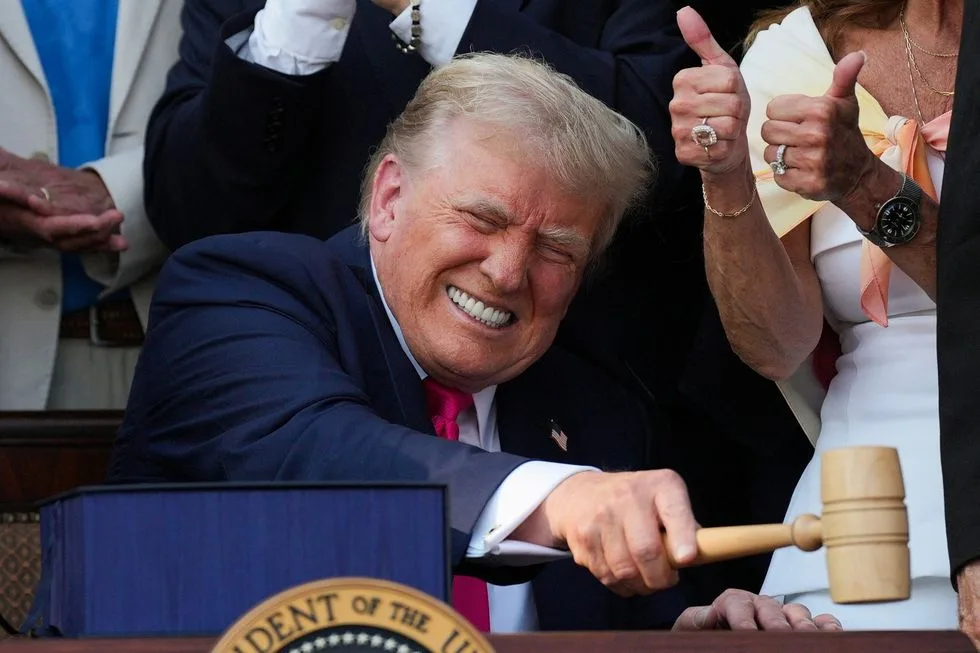
The Trump administration has begun processing $166 billion in tariff refunds following a Supreme Court ruling that struck down the legal basis for the levies, but a structural quirk in how tariffs are collected means ordinary Americans who paid higher prices for imported goods will not benefit. The administration launched a new portal in April for U.S. importers to claim refunds, though President Donald Trump has characterized the court-ordered repayments as "a travesty."
In February, the Supreme Court ruled 6-3 that Trump exceeded his constitutional authority by using the International Emergency Economic Powers Act to impose the tariffs. Chief Justice John Roberts, writing for the majority and joined by Justices Neil Gorsuch and Amy Coney Barrett, held that the Constitution reserves tariff-setting power to Congress during peacetime. Justices Sonia Sotomayor, Elena Kagan, and Ketanji Brown Jackson also voted with the majority. Justices Clarence Thomas, Brett Kavanaugh, and Samuel Alito dissented.

The refund structure creates a disconnect between who paid the tariffs and who receives the money. By law, refunds flow to the businesses that imported the goods and physically paid tariffs at customs, not to consumers who absorbed the costs through retail price increases. A March polling organization survey found that 42% of voters believe American consumers primarily bear tariff costs, while just 12% think foreign countries do. The Yale Budget Lab previously estimated that tariffs cost the average U.S. household between $600 and $800.
Phillip Magness, a senior fellow at the Independent Institute, explained that importers have already passed tariff burdens onto their customers through higher prices. "Consumers will not realize the full relief of court-ordered refunds even though they incurred the burdens through higher prices that they already paid," Magness said.
As of early May, the refund process has faced implementation challenges. The U.S. Court of International Trade reported that roughly 21% of tariff entries have been accepted for processing, with 3% already in the active refund stage. Importers have encountered system problems, including lengthy wait times resetting credentials and confusion filing claims. The Customs and Border Protection agency told the court it anticipates the first refunds flowing through the U.S. Department of the Treasury around May 11, with Phase 1 capable of processing approximately $120 billion.
A few companies, including FedEx and UPS, have announced they will refund customers. Others have not. An Illinois resident filed a class-action lawsuit against Costco in March seeking consumer refunds. Costco's CEO said during an earnings call that if the company receives refunds, it will work to return the value to members through lower prices, though that statement came without commitment.
Meanwhile, Trump has moved to rebuild tariff authority under different statutes. Days after the Supreme Court ruling, he imposed a 10% global tariff under Section 122 of the Trade Act of 1974, which now faces legal challenge. The administration is also pursuing tariffs under Section 301 of the Trade Act, with hearings scheduled for May 5 and potential implementation as early as July.