

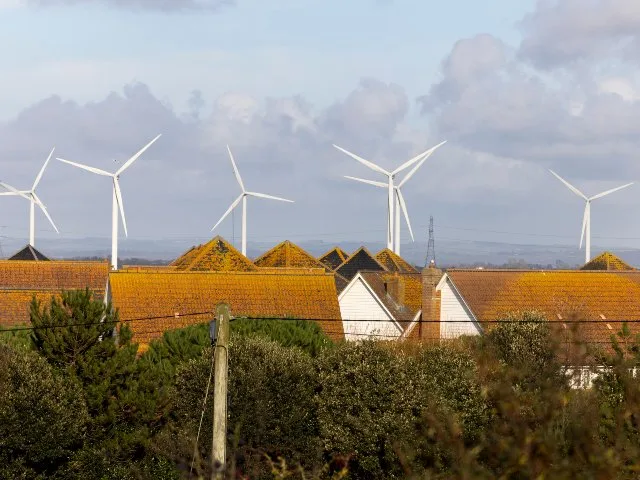
At least 1,000 wind turbines across the United Kingdom contain brake components with asbestos, a banned hazardous material, imported from third-party suppliers in China. The discovery has raised alarms over worker safety and the adequacy of supply chain controls in the renewable energy sector.
The contaminated parts reportedly contain chrysotile, a type of white asbestos outlawed in the UK since 1999. British law prohibits the manufacture, sale, and import of asbestos-containing materials, making this situation deeply troubling from both legal and health perspectives. The asbestos was found inside brake components used in lifts and hoists within turbine towers, where exposure risk is typically low because the material is sealed.

The GMB trade union has formally urged the UK government and the Health and Safety Executive to provide a full explanation of the contamination and outline the current cleanup process. The union highlighted the irony of the country having banned asbestos decades ago only to see it reintroduced indirectly through imported parts. It also criticized the outsourcing of contracts overseas, linking it to the importation of hazardous materials that could jeopardize worker safety.
The asbestos contamination came to light during routine inspections or maintenance work, although the exact details of how it was detected have not been publicly revealed. Industry experts caution that while the asbestos is presently encased and non-friable—meaning it does not release airborne fibers under normal conditions—strict procedures are needed to safely remove and replace these components.
The Energy Institute, which represents energy sector professionals, confirmed awareness of the issue and stated it is collaborating with turbine manufacturers, lift suppliers, and the Health and Safety Executive to coordinate safe component replacements. The institute emphasized that there is currently no evidence of health risks to workers or any wrongdoing by turbine operators.
As the investigation continues, questions remain about the robustness of quality control in offshore supply chains for UK renewable infrastructure and the regulatory oversight necessary to prevent hazardous materials from entering critical energy assets.