

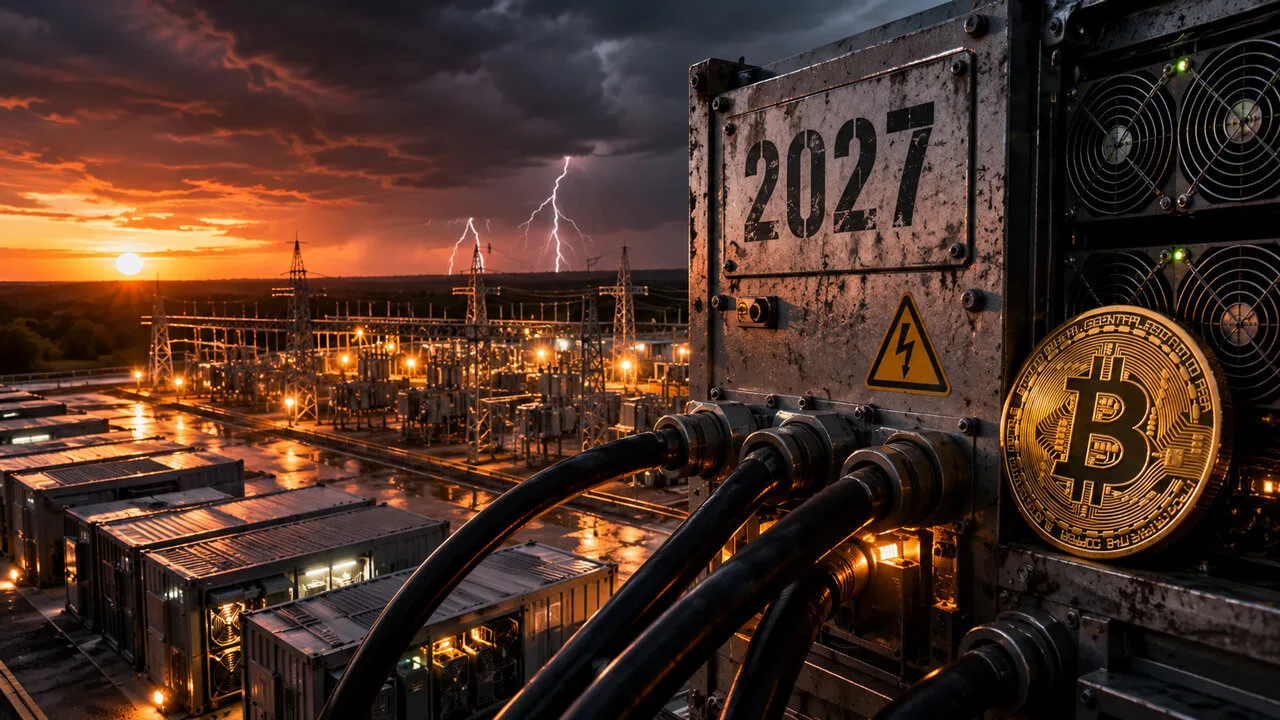
The United States is facing a surge in electricity consumption projected to reach unprecedented levels by 2027, intensifying pressure on an already strained power grid. The US Energy Information Administration (EIA) forecasts that total electricity use will rise significantly, fueled by growth in AI data centers, cryptocurrency mining, and the broader electrification of industries and households.
In a notable shift, commercial electricity consumption is expected to surpass residential demand by 2026, marking a historic change in grid dynamics. This increase adds a continuous load equivalent to over 23 gigawatts on top of existing consumption, challenging grid operators to manage demand peaks while integrating this new class of major power consumers.

Bitcoin miners, traditionally focused on securing low-cost electricity, now find themselves competing in the same category as large AI facilities and manufacturers, all drawing heavily from a grid designed for slower growth. This sector faces a critical deadline: by 2027, miners must validate their contribution to grid stability through demonstrated flexibility in power usage.
The Electric Reliability Council of Texas (ERCOT), which oversees the state's grid, highlights cryptocurrency mining and data centers as primary drivers of demand growth. ERCOT has established voluntary curtailment agreements with these facilities, incentivizing them to reduce electricity use during peak demand or when generation capacity falls. Such demand response is seen as a potential tool to ease grid strain and maintain reliability.
Research specific to Texas suggests that Bitcoin miners' electricity consumption responds to wholesale price signals and coincident-peak transmission charges—financial incentives that encourage curtailment during grid stress. However, this responsiveness diminishes when Bitcoin’s hashprice—the revenue per unit of mining power—increases, reducing miners’ incentive to reduce load even when the grid is stressed.
Grid operators recognize different demand characteristics across sectors:
- AI data centers maintain high, firm electricity use with priority often given due to their strategic infrastructure status.
- Cryptocurrency miners offer potentially interruptible, price-sensitive loads that can provide flexible demand response if incentive structures are effective.
- Manufacturers generally present less flexible demand influenced by political and economic considerations, often resisting new capacity charges attributed to rising demand.
- Residential consumers tend to drive peak-sensitive load, which impacts daily demand cycles.
Ultimately, Bitcoin miners face a balancing act between profitability and providing verifiable grid flexibility. Their ability to adapt usage patterns and participate in demand response programs will influence regulatory and market acceptance as grid demand intensifies. The coming years will test whether crypto mining can transition from a controversial, high-power activity to a valuable asset for the power system’s reliability and efficiency.