

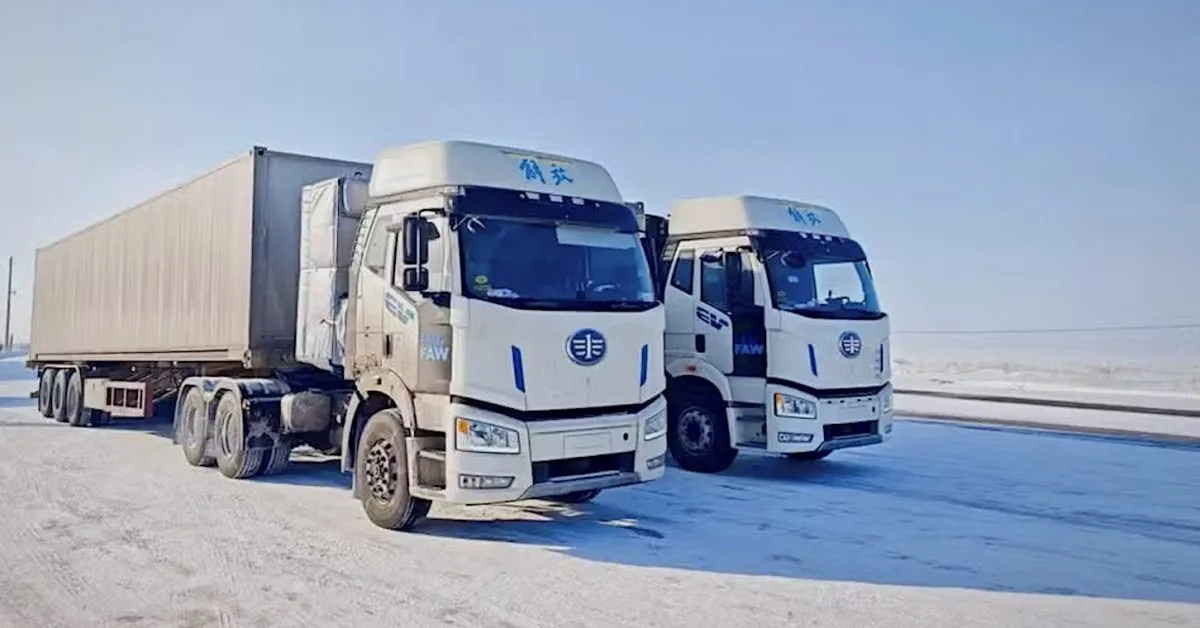
Chinese heavy truck maker FAW Jiefang recently conducted an extensive field trial of sodium-ion batteries in its electric trucks, covering more than 15,000 kilometers over nearly seven months. These tests simulated real operational conditions, assessing battery performance under extreme temperatures and diverse logistical demands rather than relying on lab benchmarks.
The 339 kWh sodium-ion battery pack, co-developed with supplier Zhongke Haina, demonstrated remarkable resilience, retaining over 90% of usable capacity at temperatures as low as -40°C. This endurance suggests the technology is suitable for challenging environments, such as northern China’s coldest regions where overnight lows can reach -20°C.

Beyond temperature tolerance, the trials confirmed the batteries’ rapid charging ability, requiring only 20 to 25 minutes for a full charge. This quick turnaround could significantly reduce downtime for freight fleets, streamlining logistics and maintaining high operational efficiency. Additionally, the battery showed a cycle life exceeding 8,000 fast charging sessions, surpassing current industry benchmarks.
Zhongke Haina emphasized the inherent safety and stability advantages of sodium-ion chemistry. Its milder chemical reactions and superior thermal stability address the rigorous demands of commercial heavy-duty vehicles, which experience frequent heavy loads, continuous operation, and exposure to various weather conditions.
FAW Jiefang positions its results as a critical step in advancing sodium battery technology toward commercial viability. The company aims to position itself competitively in an industry-wide pursuit of alternatives to lithium-ion batteries that balance cost, supply security, and performance reliability.
Several major Chinese battery manufacturers are investing heavily in this emerging technology. For example, CATL plans a facility capable of producing 40 GWh of sodium batteries annually, while BYD reports development of sodium-ion cells with charge longevity exceeding 10,000 cycles. This collective push signals a growing race to commercialize sodium batteries for electric vehicles and commercial trucking.