

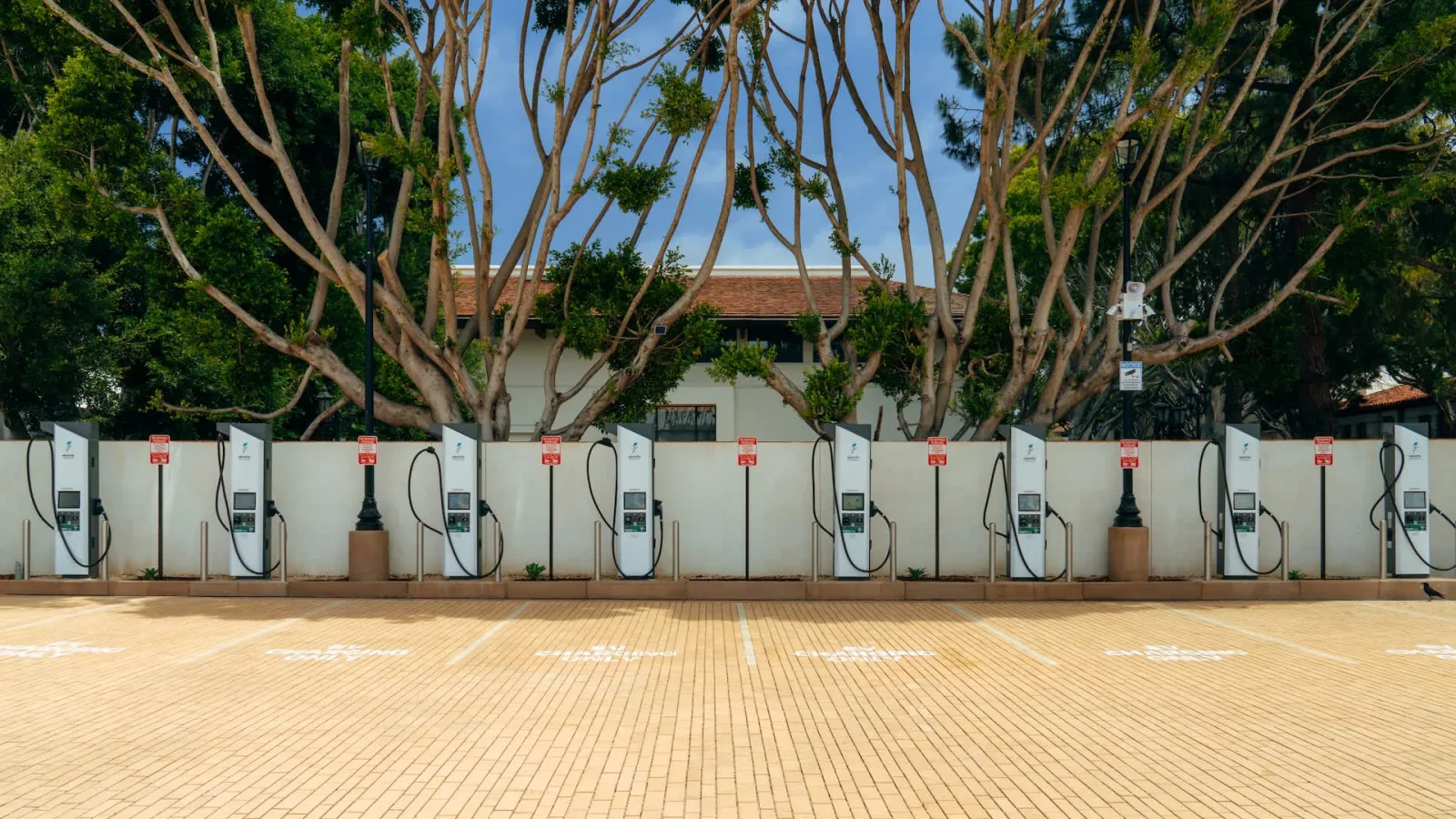
Electrify America has introduced a major electric vehicle charging hub in downtown Santa Barbara, aiming to improve access and reduce waiting times for EV drivers in a busy coastal area. Located at the former Greyhound bus depot on West Carrillo Street, the hub includes 20 DC fast chargers, each capable of delivering up to 350 kilowatts of power for rapid vehicle charging.
This is Electrify America’s second charging station in Santa Barbara and the fourth large-format hub in California, supplementing existing stations in Santa Monica, San Diego, and San Francisco. The chargers initially support Combined Charging System (CCS) plugs, with plans to introduce North American Charging Standard (NACS) connectors later this summer as part of a pilot program to broaden compatibility with different EV models.

A defining feature of this facility is its integration of a 1.9-megawatt Battery Energy Storage System (BESS), which Electrify America identifies as its largest public battery deployment to date. This onsite storage allows the hub to draw electricity during low-demand periods or when solar power is plentiful, then supply it back during peak usage times. This capability helps relieve stress on the local electric grid and manages surges in charging demand—critical in a region with substantial comings and goings along the California coast.
By combining multiple fast chargers with cutting-edge battery storage, Electrify America hopes to maintain a seamless, reliable charging experience for a growing number of EV owners. The hub’s design addresses common challenges like long wait times and grid constraints, paving the way for expanded high-speed charging infrastructure where it was once difficult to provide. The planned inclusion of NACS connectors should further enhance convenience by enabling more drivers to connect their vehicles without adapters.
According to Electrify America’s leadership, such investments are key to integrating EV charging into daily routines, especially in urban centers where demand is intensifying. This facility represents an important step toward scaling public charging and promoting wider electric vehicle adoption in California and beyond.