

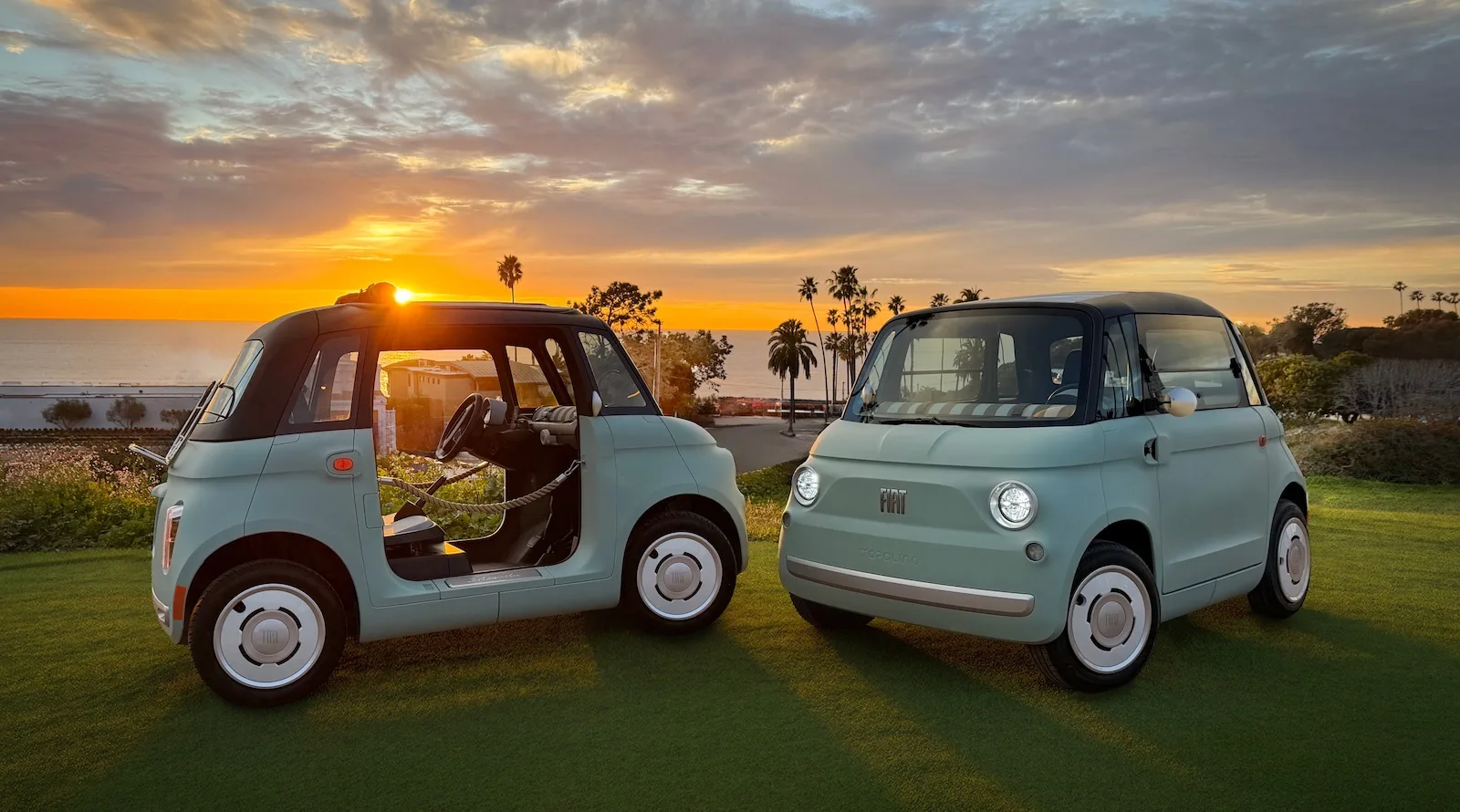
The Fiat Topolino EV makes its US debut as an ultra-compact electric vehicle specifically designed for low-speed neighborhood travel, reflecting a new direction for small-car enthusiasts. Priced at just $13,995, it offers one of the most affordable electric mobility options on the American market, targeting buyers seeking a simple, stylish way to navigate local streets rather than long-distance driving.
Despite its attractive price point, the Topolino’s limited range of 46 miles per charge and restricted top speed confine it to roads with speed limits of 35 mph or less. Presently, the vehicle is classified as a low-speed vehicle and has yet to achieve full street-legal status, with Stellantis anticipating that certification could come by late summer 2026. In practical terms, the Topolino functions more like an upscale golf cart or micromobility device than a traditional car, curbing its broader appeal and usability.

Stellantis markets the Topolino as an embodiment of Italian design and lifestyle, emphasizing simplicity and joy in urban mobility. The automaker frames it as a strategic entry into the growing micromobility segment, positioning the vehicle as a fresh alternative for consumers redefining everyday transportation within compact, modern neighborhoods.
The Topolino’s compact dimensions, modest performance, and price point appeal to those prioritizing cost-effective, short-range travel options. However, the vehicle’s limitations pose significant challenges for widespread adoption, notably in a market where higher-range used EVs are common. While it may attract enthusiasts who appreciate its design and niche purpose, its functionality remains constrained.
In summary, the Fiat Topolino EV represents a noteworthy experiment in small electric vehicles for the US, balancing affordability against practical compromises on range and speed. Its arrival signals Stellantis’ commitment to exploring urban micromobility solutions, but it remains an open question whether the American market will embrace a vehicle that blends elements of a car and a low-speed neighborhood transport device.