

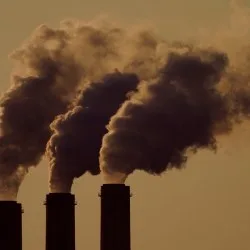
Maine has undertaken the task of compiling its own climate pollution data following a federal shutdown of nationwide greenhouse gas reporting. The Environmental Protection Agency (EPA) stopped releasing its comprehensive emissions inventories last year, breaking a three-decade tradition that served as a critical resource for climate policy decisions at all levels.
In response, the Maine Department of Environmental Protection (DEP) has joined forces with the U.S. Climate Alliance and the University of Maryland’s Center for Global Sustainability to fill in the federal data void. This collaboration aims to maintain continuity in tracking the state’s greenhouse gas emissions, which are mandated by Maine law every two years. Officials expect the upcoming statewide emissions report to be published before December 2026, despite some delays.

The state's biannual inventory measures pollution from sources including vehicles, residential and commercial buildings, industry, and electricity generation. Maine also factors in the natural carbon absorption performed by its forests, peat bogs, and other ecological reserves, providing a fuller picture of the state’s climate impact.
The University of Maryland’s Center for Global Sustainability published a national emissions inventory earlier this year and is currently updating a measurement tool that states rely on to estimate their greenhouse gas outputs—another key resource the EPA has not renewed. These inventories are essential for understanding trends in emissions relative to economic growth, as Maine reports that greenhouse gases have declined even while its GDP has increased.
This independent data effort reflects a broader trend among states committed to climate action despite reduced federal support. It underscores the importance of reliable emissions tracking as a foundation for informed policy and effective environmental management.