

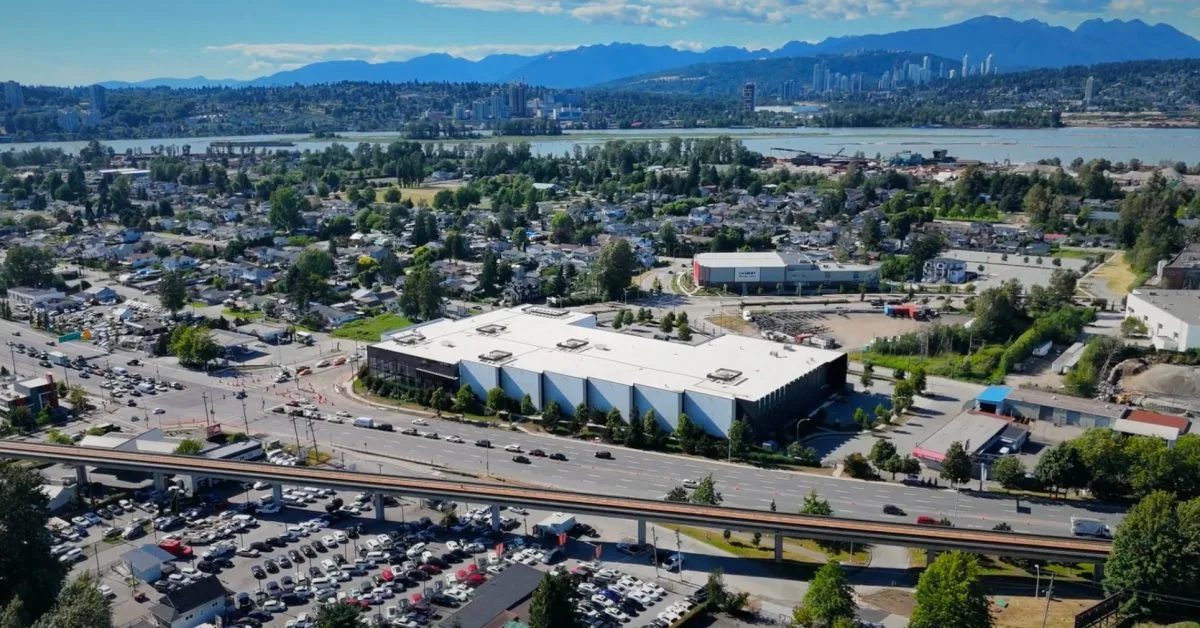
Moment Energy has swiftly inaugurated what it calls the world’s largest facility dedicated to repurposing retired electric vehicle (EV) batteries into commercial-scale stationary energy storage systems. Located in Vancouver, British Columbia, the factory—Megafactory 1—became operational just six weeks after its announcement, signaling a rapid expansion in battery reuse capacity. This milestone was marked by a ribbon-cutting event held on June 23.
Instead of producing new battery cells, Megafactory 1 focuses on extending the life of batteries that are no longer suitable for vehicle propulsion. Although these retired EV batteries lose capacity for driving purposes, they remain viable for stationary energy storage applications, such as powering data centers, hospitals, factories, microgrids, and other critical infrastructure where size and weight are less critical. This approach addresses growing electricity demand while managing the first generation of EV batteries reaching their initial end of life.

Moment Energy projects that by 2030, Megafactory 1 will generate approximately 1 gigawatt-hour (GWh) of battery energy storage systems annually. The company also anticipates that the facility will create more than 100 direct jobs and indirectly support upwards of 1,000 positions across British Columbia, reinforcing the economic impact of localizing battery technology manufacturing.
Founded in 2020 as a university startup, Moment Energy has rapidly evolved into a fully-fledged commercial battery storage company. Its growth benefited from a recent US$40 million Series B funding round, bringing total investment over US$100 million, alongside CA$4.9 million in backing from the Canadian government’s Pacific Economic Development Canada (PacifiCan). The company has also achieved a unique milestone by becoming the first to secure both product safety and functional safety certifications for a battery management system specifically designed to handle second-life EV batteries.
Moment Energy’s CEO emphasized that the factory’s quick development demonstrates the potential to reshore domestic manufacturing in North America within weeks rather than years, boosting job creation and economic prosperity while meeting the accelerating demand for energy storage solutions sourced from retired EV batteries.