

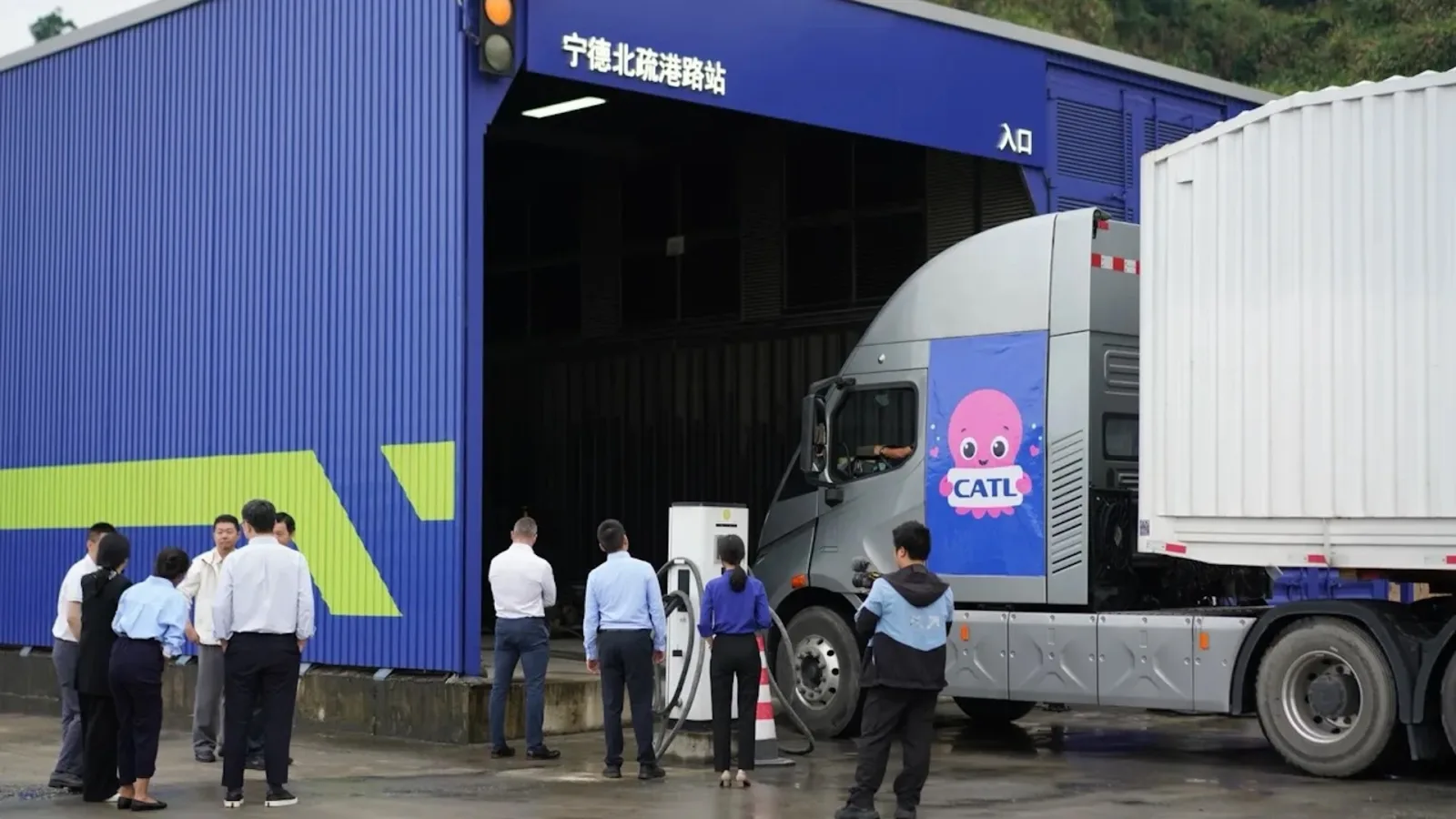
A new initiative from Octopus Energy and CATL seeks to revolutionize electric freight transport by enabling heavy-duty trucks to swap depleted batteries for fully charged ones in minutes instead of waiting hours to recharge. The plan targets the UK and Europe, with the first major battery-swapping hubs expected to open by 2027 and expand to more than 30 sites by 2035.
These “mega hubs” will store large fleets of batteries, charging them during off-peak hours when electricity costs and demand are low. This approach aims to reduce operating costs for truck fleets by minimizing downtime and tapping into cheaper, cleaner grid capacity. The battery inventory at the stations will allow thousands of trucks to quickly exchange batteries and resume their routes with minimal delay.

Battery swapping has struggled to gain traction among passenger electric vehicles, mainly due to technical challenges like standardizing battery formats and the high costs of infrastructure. However, trucks present a more favorable scenario: commercial fleets typically follow fixed routes and schedules, making rapid battery swaps far more practical and financially beneficial by reducing lost revenue during charging.
China has already demonstrated the success of large-scale battery-swapping networks for electric trucks, setting a precedent that Europe now aims to follow. This shift could accelerate the transition away from diesel-powered freight, thus lowering emissions as well as dependence on imported fossil fuels. Additionally, the hubs are designed to support vehicle-to-grid services, enhancing energy system flexibility by feeding power back into the grid when needed.
The venture values the potential impact highly. CATL’s CEO emphasized battery swapping as a key element for the future of commercial transport, highlighting China’s experience as proof of concept. Octopus Energy’s founder stressed the environmental and economic benefits, noting that efficient use of grid capacity can help reduce electricity costs for all users while making trucking cleaner and more cost-effective.
Once fully operational, the network could serve over 300,000 electric trucks and attract private investment exceeding £30 billion, reflecting broad expectations for the growth of electric freight across Europe and the UK.