

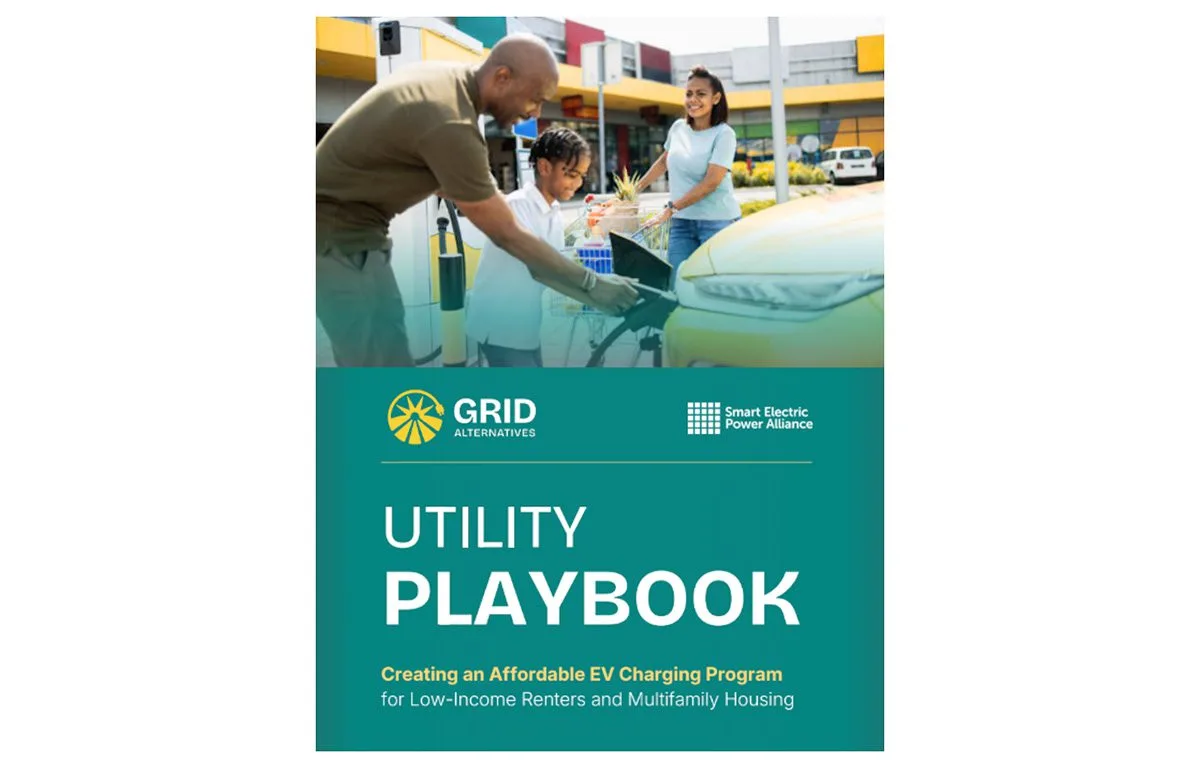
Electric utilities now have new resources to tackle the affordability gap faced by low-income electric vehicle (EV) drivers, particularly renters and residents of multifamily housing. Two nonprofit organizations, GRID Alternatives and the Smart Electric Power Alliance (SEPA), have collaborated to produce a Utility Brief and a Utility Playbook aimed at guiding utilities in creating equitable EV charging programs.
The materials highlight the "renter’s penalty," a phenomenon where renters miss out on the cost benefits of home-based EV charging due to limited access. Instead, they rely heavily on public charging infrastructure, which often comes at a higher price. The Utility Brief examines this affordability challenge, while the Utility Playbook provides practical strategies for utilities to implement discounted and income-qualified charging options.

GRID Alternatives, experienced in working with multiple utilities to deploy and assess EV charging projects for low-income populations, built the Playbook around real-world pilot projects. These projects serve as examples of how utilities can create flexible models for expanding affordable charging access. The Playbook encourages utilities to leverage their existing income-qualified discount programs and apply similar frameworks to shared or public charging facilities, including those in multifamily housing complexes.
By integrating affordability measures into their public and shared charging networks, utilities can ensure low-income drivers pay consistent and predictable rates across service areas. SEPA’s contribution emphasizes the importance of utility-driven insights, promoting adaptive programs that reflect the diverse needs and charging habits of EV users, rather than adopting a one-size-fits-all model.
Both the Utility Brief and Utility Playbook are publicly accessible and aim to support utility decision-makers and planners working to reduce economic barriers to EV adoption for underserved communities.