

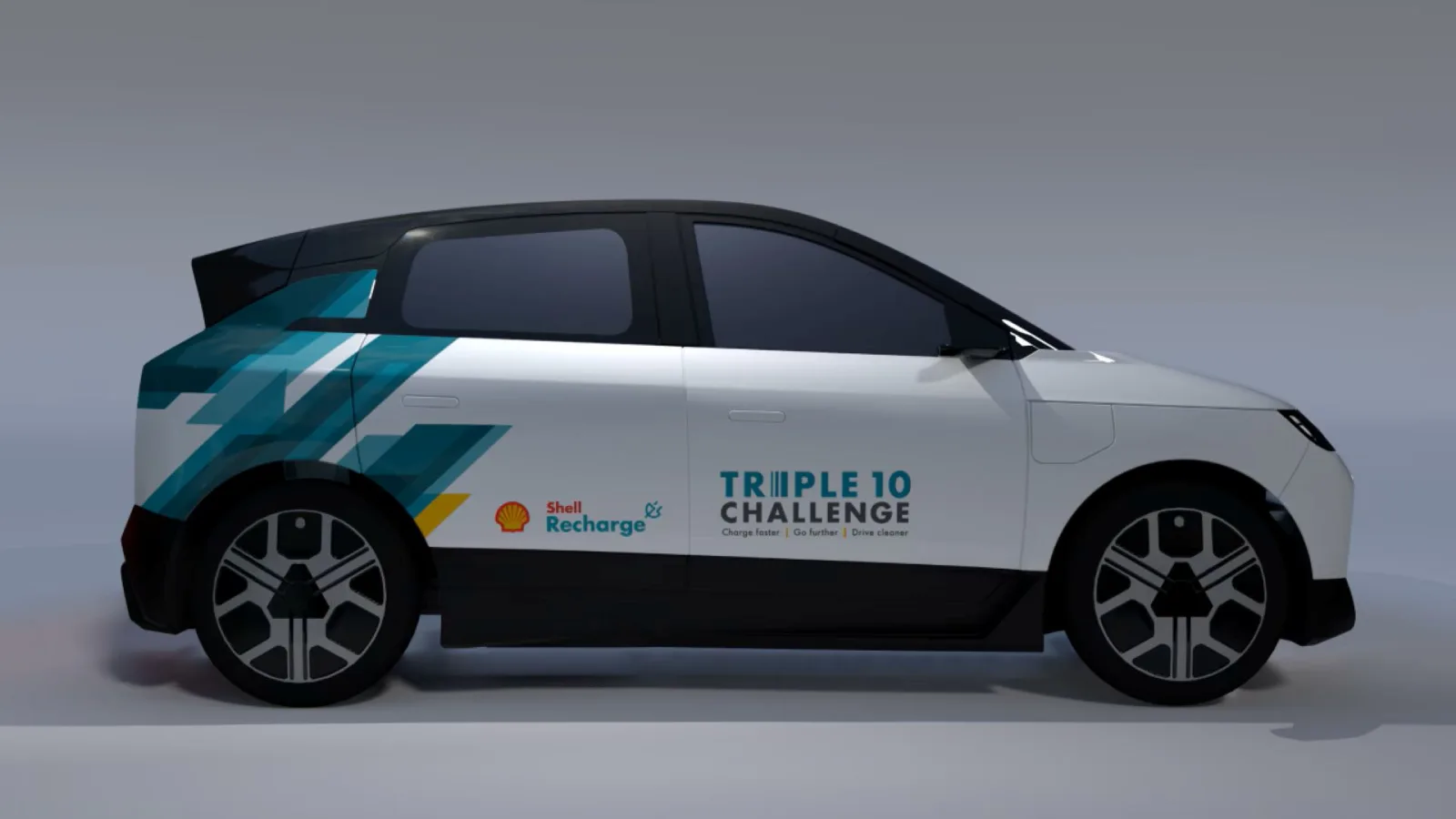
Shell has unveiled an electric city car concept showcasing a groundbreaking battery cooling technology aimed at drastically reducing charging times and improving efficiency. The concept employs a novel dielectric fluid that surrounds battery cells directly, enabling faster heat transfer during high-power charging sessions.
Unlike conventional EVs that use indirect cooling methods, Shell’s system uses a nonconductive liquid to manage battery temperature more effectively. This approach prevents overheating, allowing the battery to sustain faster charging rates without degrading performance or longevity. Shell claims the vehicle can reach 80% charge from 10% in under 10 minutes when connected to a 175-kilowatt charger, adding around 15 miles of driving range per minute.

The concept also aims to cut the vehicle’s carbon footprint by half compared with existing European electric cars and promises an efficiency rate of approximately 6.2 miles per kilowatt-hour. While Shell does not appear to plan manufacturing the car itself, the company is promoting this technology as a potential industry standard for other automakers to adopt, especially for compact urban EVs.
Battery temperature control is critical because it affects charging speed, driving range, and battery lifespan. Traditional battery packs slow their charging rate once temperatures rise during rapid charging to avoid damage. Shell’s design challenges this limitation by directly cooling individual cells with a dielectric fluid, which is safe to use around high-voltage components due to its nonconductive nature.
This innovation could redefine fast charging dynamics, making quick stops more efficient and enhancing electric vehicle usability on longer trips. Additionally, higher efficiency means lower energy consumption and potentially reduced operational costs for owners, especially those charging at home where electricity rates tend to be cheaper than public networks.
The concept has sparked debate among industry observers and EV enthusiasts regarding the durability and safety of the new coolant. Some raised concerns about its fire resistance in severe collisions, while others pointed out that modern EV coolants already demonstrate long lifespans and reliability. Shell emphasizes that the fluid is highly resistant to ignition, although combustion could occur under extreme conditions involving external fire.
As electric vehicles continue evolving, innovations like Shell’s dielectric fluid battery cooling could play a key role in pushing fast charging capabilities forward while minimizing environmental impact.