

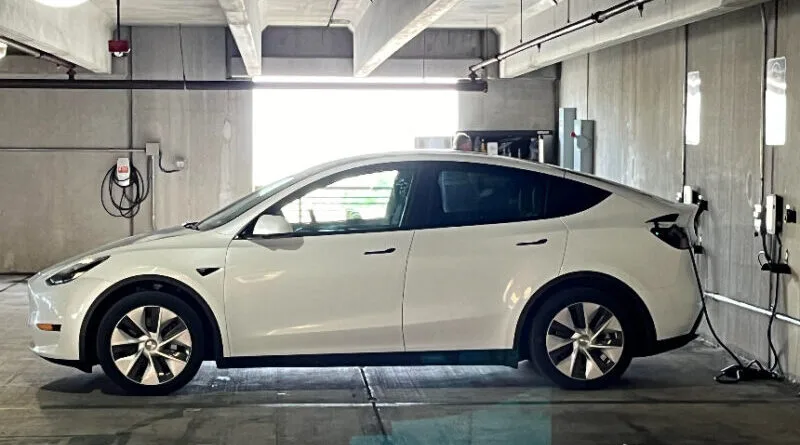
The United States has reached a key milestone in its clean transportation infrastructure with over 250,000 public electric vehicle (EV) charging ports now in operation across more than 80,000 sites nationwide. This expansion signals substantial progress toward the federal goal of deploying 500,000 public EV chargers by 2030, outlined under the Biden-Harris administration’s commitment to building a reliable and accessible electric vehicle network.
Public EV charging stations have been growing steadily despite economic challenges, pandemic disruptions, and political opposition from some sectors. Federal funding has supported states in installing fast chargers along major travel corridors, facilitating long-distance electric vehicle travel. In parallel, retail locations such as shopping centers, convenience stores, restaurants, public libraries, and community centers have increasingly added Level 2 and fast chargers. These sites provide EV drivers with the advantage of charging their vehicles while engaging in everyday activities like dining, shopping, or relaxing.

This progress takes place against the backdrop of widespread public uncertainty, misinformation, and political pushback around electric vehicles. Yet, the infrastructure build-out continues unabated, with thousands of additional public chargers in development, signaling sustained future growth beyond the current total. Although public chargers are vital for travel and convenience, most EV charging occurs at home. California alone may have over 800,000 home-based chargers, a figure not included in public charging statistics.
When combined, home and public chargers likely total well over one million across the country, a number approaching the scale of gasoline pumps nationwide. Given that the average American drives less than 40 miles per day, this hybrid model of home-dominant charging supplemented by public stations supports both daily commuting and longer trips. The ongoing expansion of EV infrastructure represents not only a technological shift but also a transformation in how Americans fuel their vehicles and manage everyday travel demands.