

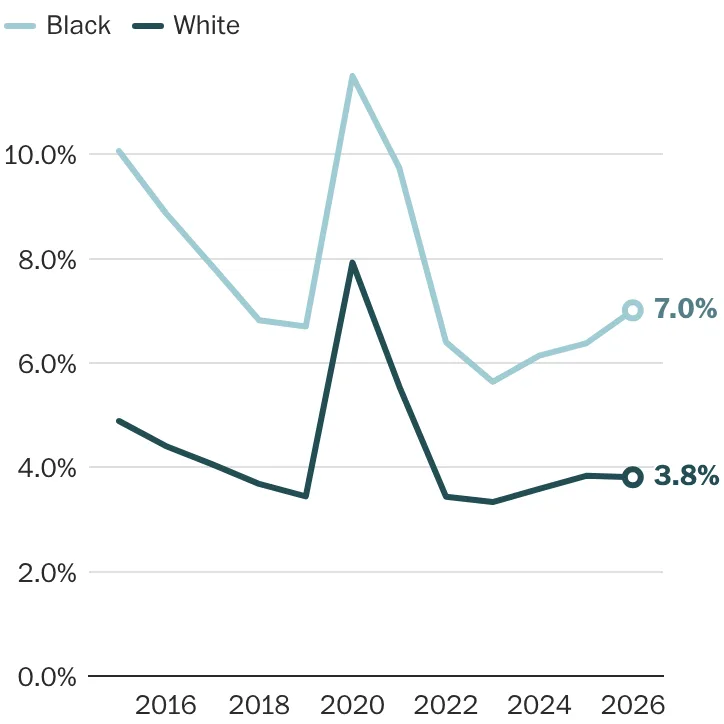
In the opening months of 2026, unemployment among Black Americans climbed, contrasting with stable rates among White workers, according to a recent analysis of federal employment data conducted by the Washington Post. The average Black unemployment rate reached 7 percent, marking a noticeable increase compared to the same period last year, while the White unemployment rate showed little change.
This divergence has intensified concerns about an expanding employment divide between Black and White workers. By June, the gap in unemployment rates nearly maintained a ratio of two-to-one, with the overall disparity growing by approximately 11 percent compared to the first half of 2025. This persistent gap underscores ongoing challenges faced by Black job seekers, especially among college-educated Black women.

The rising unemployment rate reflects broader structural issues, including federal workforce reductions initiated during the previous administration, which disproportionately impacted Black employees. A Washington Post report on the difficulties faced by four highly educated Black women in the South exemplified how these cuts and labor market barriers continue to hinder employment opportunities.
These trends highlight the persistent racial inequalities within the American labor market despite economic recovery efforts, signaling the need for focused policies and programs to address systemic joblessness among Black communities.