

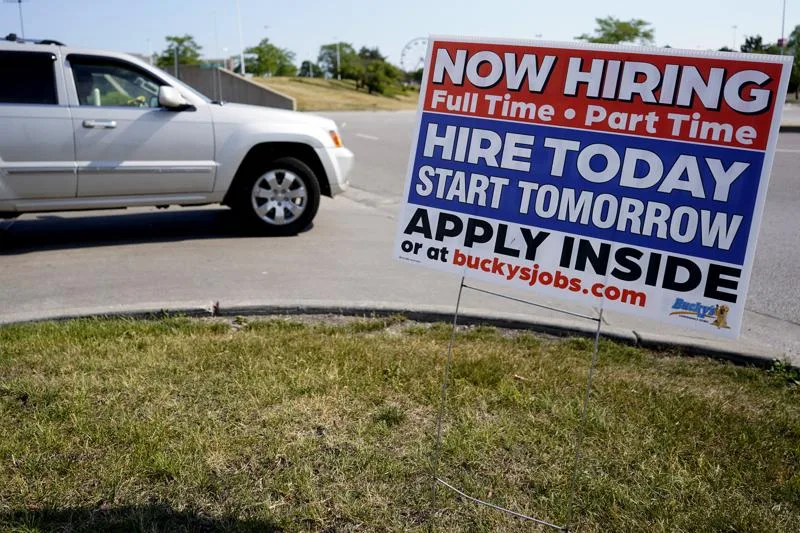
Florida’s unemployment rate stabilized in May after months of increases, holding steady at 4.8%, according to data released by FloridaCommerce, the state's economic development bureau. This rate matches April’s figure but marks a notable rise from 3.6% recorded in May last year.
The state’s jobless rate currently exceeds the national unemployment figure, which stayed at 4.3%. Approximately 531,000 Floridians were unemployed out of a labor force of 11.14 million. Seasonally adjusted nonagricultural employment showed a slight month-over-month decline of 2,000 positions but a year-over-year gain of 11,000 jobs.

Despite the overall increase in unemployment, some industries demonstrated positive momentum. Education and health services expanded by about 31,400 jobs over the past year, while professional and business services grew by 17,600. The leisure and hospitality sector, a crucial part of Florida's economy, added 5,300 positions. However, seven out of ten major industries experienced job losses compared to the previous year.
Financial activities were hardest hit, losing roughly 15,500 jobs, followed by government employment which dropped by 9,200. The trade, transportation, and utilities sectors also declined by 6,900 jobs, reflecting uneven recovery across economic areas.
Regional employment varied significantly. Thirteen of Florida’s 25 largest metropolitan areas reported job gains year-over-year. Orlando led with an increase of 18,300 jobs, while Lakeland and Sarasota-Bradenton added 3,200 and 2,900 jobs, respectively. Conversely, eleven metro areas recorded job losses, with the Fort Lauderdale region seeing the largest decrease of 8,300 positions. Palm Beach County and Jacksonville also experienced significant declines.
The unemployment rate among counties ranged widely. Miami-Dade posted the lowest rate at 2.6%, followed by Monroe County at 3%. At the other end of the spectrum, Taylor County recorded the highest jobless rate of 8.1%, with Sumter County close behind at 7.6%.