

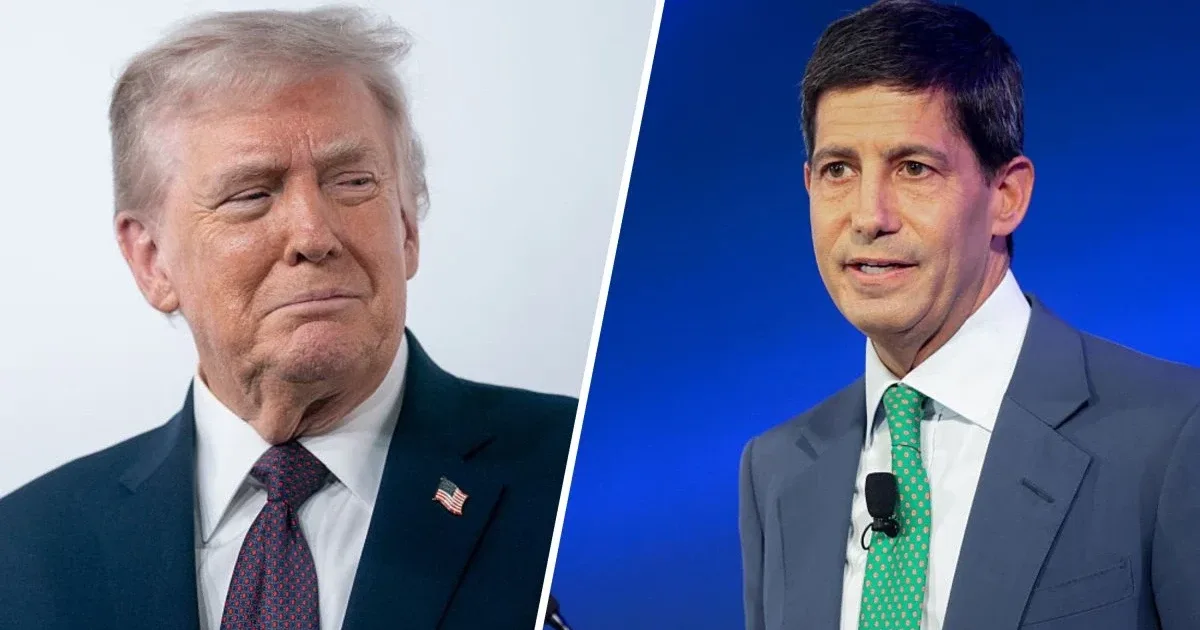
Kevin Warsh stepped into his first Federal Reserve meeting as chair amid a complex environment marked by inflation stubbornly above target, market skepticism about rate hikes, and mounting pressure from President Donald Trump to ease monetary policy. The meeting held on June 16-17 represented a critical test of Warsh’s leadership over U.S. monetary policy in uncertain economic and political conditions.
Inflation remained elevated, with the Personal Consumption Expenditures price index rising 3.8% year-over-year in April, well above the Fed’s 2% goal. Labor market data underscored the economy’s resilience, showing low unemployment at 4.3% and continued job growth, which complicated the decision on whether to tighten or hold policy steady. Market indicators suggested little expectation of rate increases this year, assigning only around a 30% chance of a hike by early 2027.

Warsh’s arrival at the helm followed a rapid confirmation process. Nominated by Trump in early March, he was confirmed by the Senate in May, assuming both the Board membership and the chairmanship with a term running through 2030. His dual tenure positions him to influence monetary policy decisions for years, confronting the ongoing debate over the appropriate duration and degree of restrictive borrowing costs.
The chair’s background reflects deep experience in both the public and private sectors, including legal education at Harvard Law School, a substantial tenure at Morgan Stanley, and prior service at the Fed Board and the National Economic Council. His views advocate a smaller Fed balance sheet and a reconsideration of inflation measurement, which align partially with Trump’s push for lower rates but stop short of promising immediate rate cuts.
The crucial question at this early stage was whether Warsh would maintain a hawkish stance to control inflation or acquiesce to political calls for looser monetary policy. His first press conference was widely anticipated to provide insight into the future direction of the Fed under his leadership, balancing economic fundamentals against political expectations.