

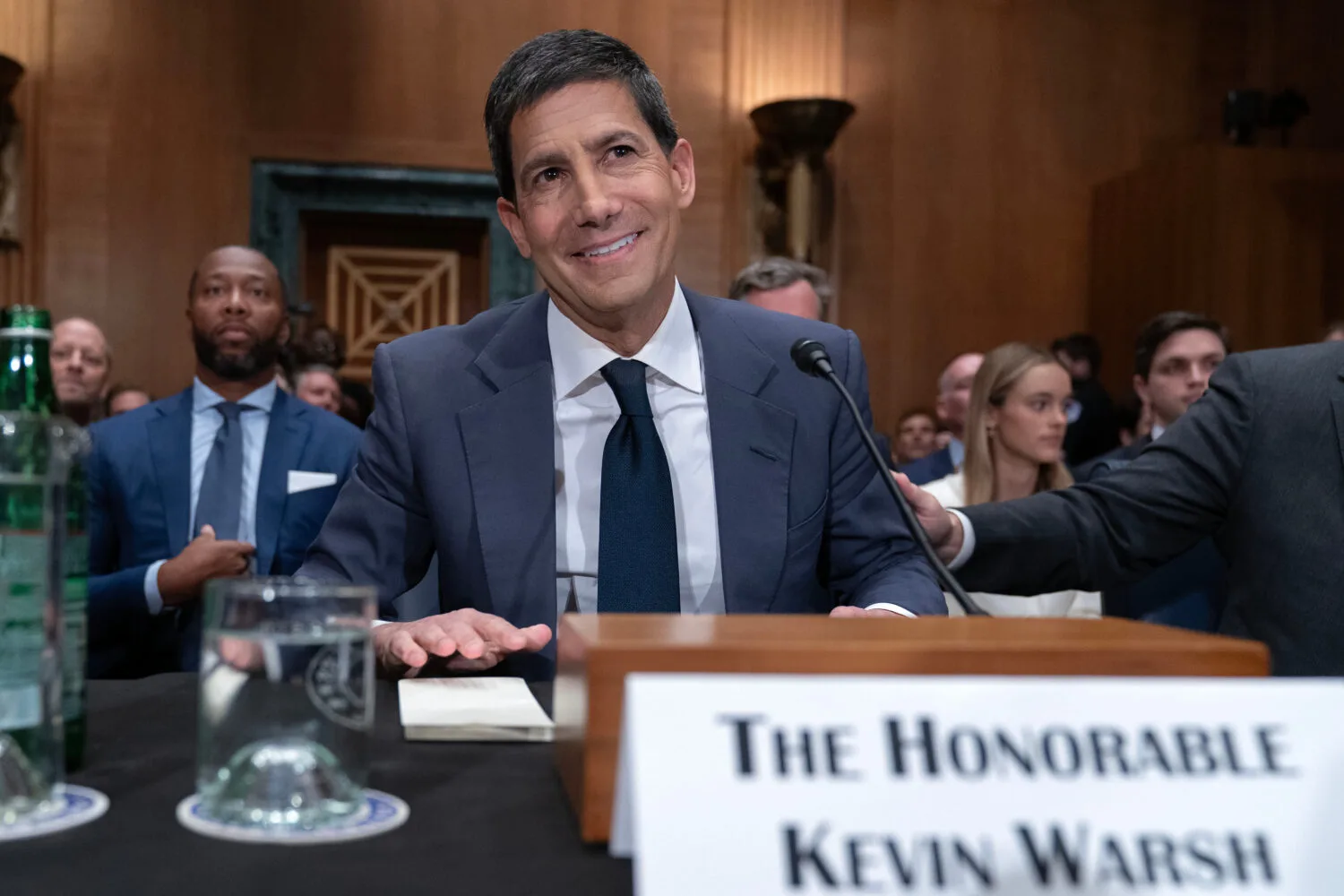
The Senate is set to approve Kevin Warsh as the next chairman of the Federal Reserve, solidifying his leadership at a pivotal moment for the U.S. and global economies. Following his recent confirmation to the Fed’s Board of Governors, Warsh is expected to assume the helm amid growing inflation and internal divisions within the Fed’s interest rate committee.
Warsh’s nomination had faced uncertainty after Republican Senator Thom Tillis threatened to block the appointment pending a Justice Department investigation into current Fed Chair Jerome Powell. That investigation was later dropped, clearing Warsh’s path to confirmation. His ascension comes as inflation remains above the Fed’s 2% target for the fifth consecutive year, intensified recently by surging energy prices.

The Federal Reserve faces internal discord, evidenced by a rare surge in dissenting votes during last month’s interest rate decisions. Meanwhile, Powell is planning to stay on the Fed’s board after his chairmanship ends, potentially setting up a dual power dynamic. This unusual arrangement sparks debates on the future direction of monetary policy and institutional independence.
Warsh, a former senior Federal Reserve official, is stepping into an environment pressured by persistent economic challenges and political scrutiny. President Donald Trump criticized Powell’s cautious approach to interest rates and sought aggressive rate cuts to favor stock market gains, despite traditional economic advice advising otherwise. Warsh’s stance on interest rate policy remains a central concern, with skeptics questioning whether he will prioritize economic data or political pressures.
At his confirmation hearing, Warsh denied that Trump pressured him to lower rates. However, his unwillingness to acknowledge Joe Biden’s 2020 election victory drew criticism from some Democrats. Senator Elizabeth Warren labeled him a “sock puppet” for Trump, highlighting partisan tensions tied to the Fed’s leadership.
The White House’s National Economic Council director recently expressed optimism, suggesting that Warsh’s expertise will contribute to gradually reducing interest rates in line with economic conditions. With the Senate vote imminent, Warsh’s confirmation signals a transition in the Federal Reserve’s strategy amid ongoing economic uncertainty and political challenges.