

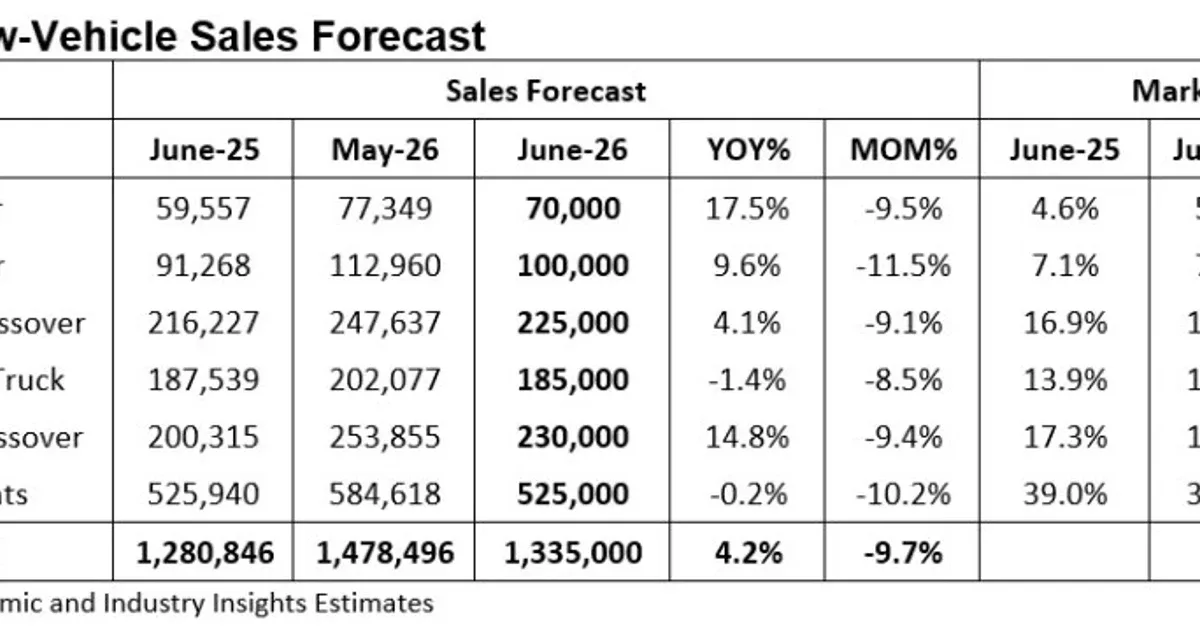
U.S. vehicle sales exceeded analysts’ expectations despite ongoing challenges from inflation, higher fuel costs, and geopolitical uncertainties linked to the conflict in Iran. According to Cox Automotive, the annualized sales pace in June reached 16.1 million units, demonstrating robust consumer demand. Sales during the first half of 2026 were down only slightly compared to the previous year, signaling sustained market strength.
The resilience stems in part from differing consumer behaviors: wealthier buyers continue purchasing large, high-value vehicles, which supports elevated average transaction prices. Meanwhile, lower-income consumers have reduced spending, creating a market split. Additionally, lower borrowing rates have eased financing pressures on monthly payments, making vehicle acquisition more manageable for some buyers.

Hybrid vehicles have attracted shoppers drawn to improved fuel efficiency without sacrificing quality or cost, helping manufacturers maintain some momentum amid fuel price increases. This shift also aligns with automakers’ efforts to expand electrified vehicle production.
Within the industry, General Motors remains a key player despite a year-over-year sales decline. GM reported record sales for its Sierra pickup in the second quarter and strong numbers for Canyon mid-year. The company continues to offer several Chevrolet and Buick models priced near $30,000, aiming to appeal to cost-conscious buyers. GM also holds the position of the No. 2 electric vehicle seller in the U.S.
Other manufacturers showed positive gains in the quarter: Toyota saw a slight increase, Hyundai grew modestly, and Stellantis benefited from strong Ram truck sales, boosting its overall results. Toyota’s recent performance is narrowing its gap with GM, potentially setting the stage for a battle for the top U.S. automaker spot by year-end if the trend continues.
Efforts to scale up hybrid and electric vehicle output are accelerating. GM’s North American operations emphasize rapid progress at a dedicated electrified-vehicle factory near Savannah, Georgia, designed to produce up to 500,000 vehicles annually. This move illustrates the industry’s pivot towards more sustainable platforms.
Cox Automotive has maintained its forecast for 2026 vehicle sales at 15.8 million units, projecting a slight decline from 2025 but underscoring overall market stability despite external pressures from inflation and global tensions.