

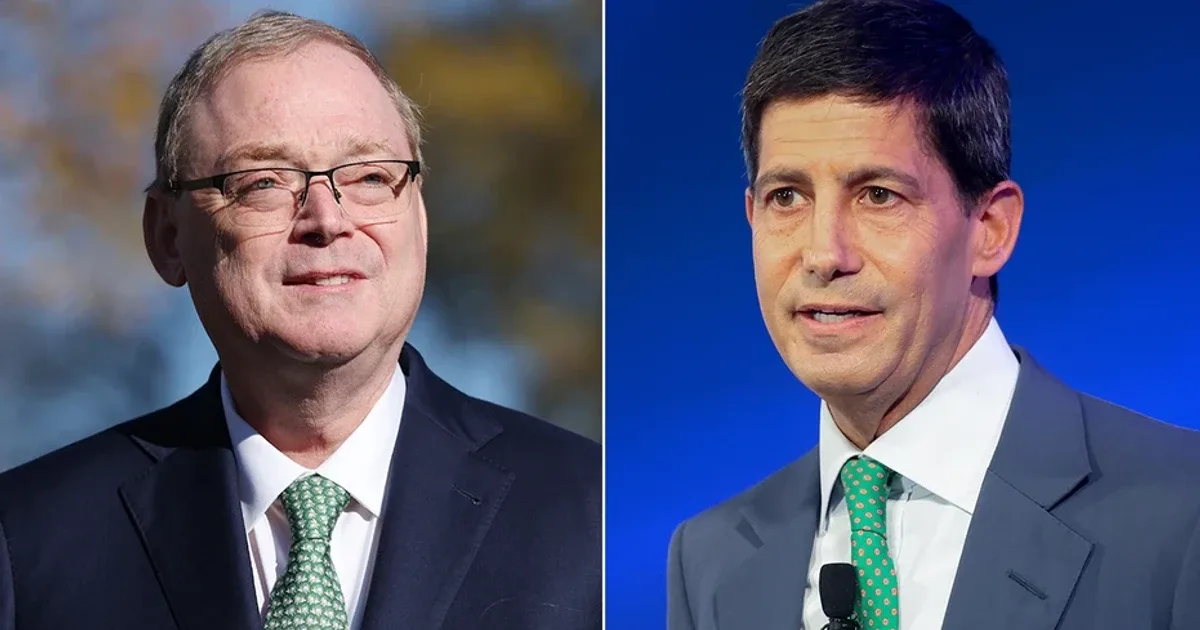
Kevin Warsh marked his Federal Reserve swearing-in by invoking Alan Greenspan’s legacy, signaling a shift toward less frequent and less detailed Fed communication. Warsh emphasized a preference for a central bank that trusts financial markets to interpret policy signals rather than relying on explicit forward guidance.
At his White House ceremony, the first Fed chair sworn in there since Greenspan, Warsh referenced Greenspan multiple times, pointing to a model of Federal Reserve leadership that values discretion and ambiguity. Greenspan’s era was known for steady economic growth with controlled inflation but also for a Fed that communicated cautiously, often leaving markets to infer the central bank’s intentions.

Warsh’s public statements and confirmation hearing highlighted his inclination to reduce the frequency of Fed officials’ public appearances and to move away from the practice of holding press conferences after every policy meeting—an approach broadly associated with the current chair, Jerome Powell. This stance suggests a Fed that would offer less explicit guidance on interest rate paths, compelling investors to rely more on market signals.
This approach, Warsh’s supporters argue, could restore a disciplined and restrained Fed that avoids over-explaining policy decisions. However, critics caution that increasing opacity may pose risks in a volatile economic environment marked by inflation concerns and significant political scrutiny. Public trust and market stability could suffer if the Fed retreats from transparent communication.
Greenspan’s chairmanship, stretching from the late 1980s through the mid-2000s, defined the Great Moderation, a period of sustained economic calm, but also saw critiques for insufficient regulatory oversight that some link to subsequent financial vulnerabilities. Greenspan himself later acknowledged misjudgments during the financial crisis, particularly regarding assumptions about market efficiency and risk.
Warsh’s nod to Greenspan sets expectations for a Federal Reserve style that favors subtle signals over direct messaging, a return to an era where central bank communication was deliberately less explicit. This shift could reshape how markets and the public anticipate and react to monetary policy amid ongoing economic challenges.