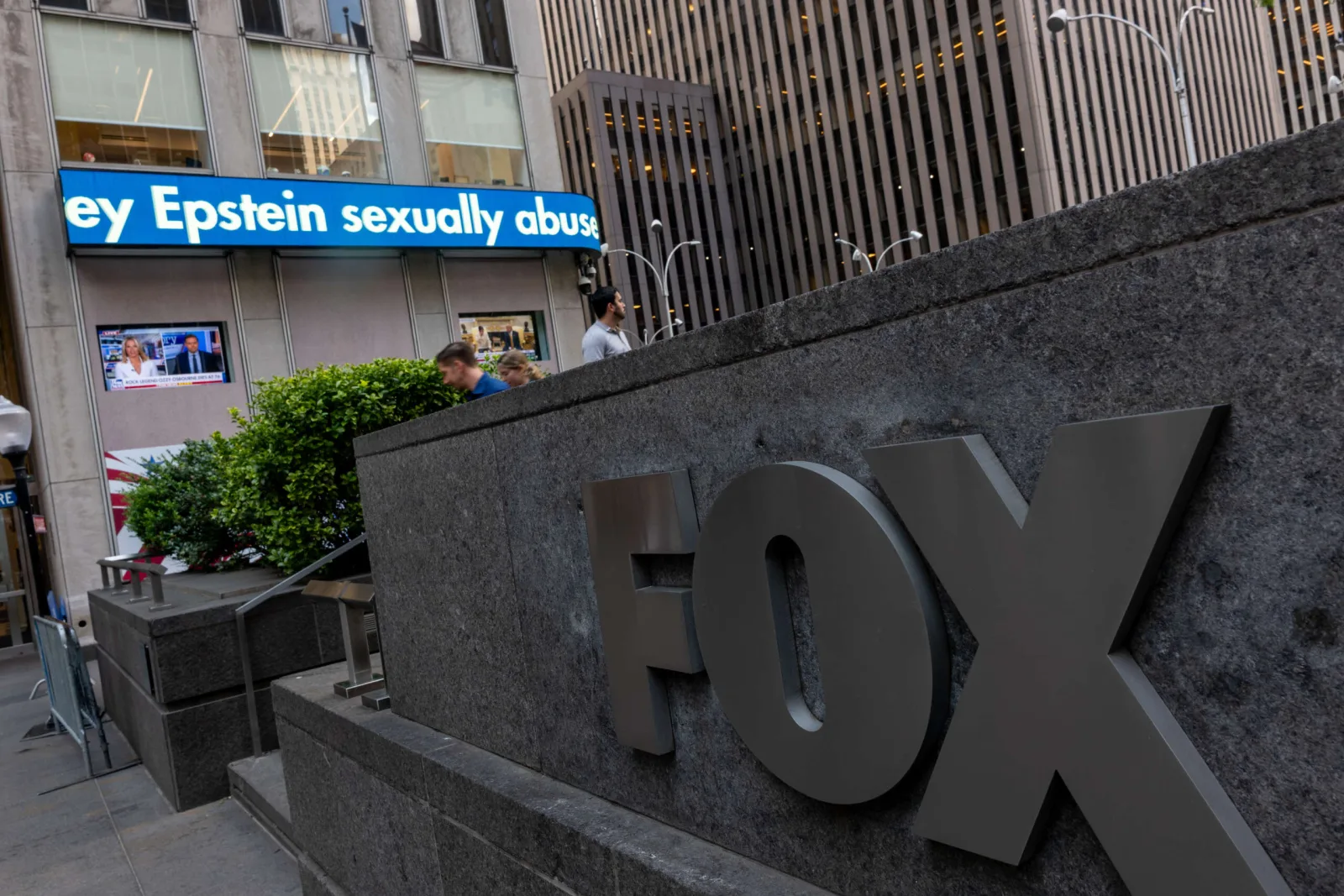
A survivor imprisoned in a Texas state facility has detailed how incarceration policy restricts her access to news and information, requiring her to watch Fox News as the sole television option available during her daily hour of programming. The restriction applies to inmates at higher security classifications, who have no choice in which channels they view, unlike lower-security populations who vote on television access.
The author describes receiving coverage of the Epstein files through Fox News while incarcerated—coverage that she argues minimizes connections between the financier and former President Donald Trump, whose name appears in documents related to the case. She notes the irony that the network was founded by Roger Ailes, who was removed from Fox News in 2016 after more than 20 women came forward with sexual harassment allegations. Texas holds nearly 150,000 people in state prisons, and some studies indicate that up to 95 percent of incarcerated women have experienced domestic or sexual violence.

The constraints on media access extend beyond television. Incarcerated people in Texas cannot purchase or operate their own televisions. Two shared screens serve dormitories housing almost 90 people each. Radio access depends on outside financial support for equipment purchases. American Family Radio, owned by the American Family Association and classified as a hate group by the Southern Poverty Law Center due to its anti-LGBTQIA+ agenda, broadcasts freely. Focus on the Family, which has opposed reproductive rights and LGBTQIA+ equality, also transmits without restriction.
Tablet-based "free" content available to incarcerated people includes the Christian Broadcasting Network, Newsmakers, and Pando, a Christian nationalist app. The author notes that verified news sources like The New York Times do not deliver to her prison's rural, Republican ZIP code, while Associated Press apps cost $2 monthly and remain unavailable to those with higher security classifications. Organizations including Turning Point USA maintain physical presence inside Texas prisons, donating materials such as calendars and day planners.
The author frames this media landscape as a form of state control. She argues that by making conservative and Christian nationalist content free while charging for independent journalism, the state has made a deliberate political calculation. The ideology transmitted through these channels—that LGBTQIA+ people pose a threat, that women's primary role is domestic, that authority should not be questioned—shapes how incarcerated people, particularly women returning to their communities, understand power and rights.
She connects the media restrictions to broader state interests, noting the Trump administration's attempts to defund public media like NPR. The contrast between what receives unrestricted access and what is blocked, she argues, constitutes a policy statement about which speech the state values. For survivors of sexual violence forced to consume news produced by networks linked to figures accused of predatory behavior, the restriction represents what she characterizes as an extension of the violence already experienced.