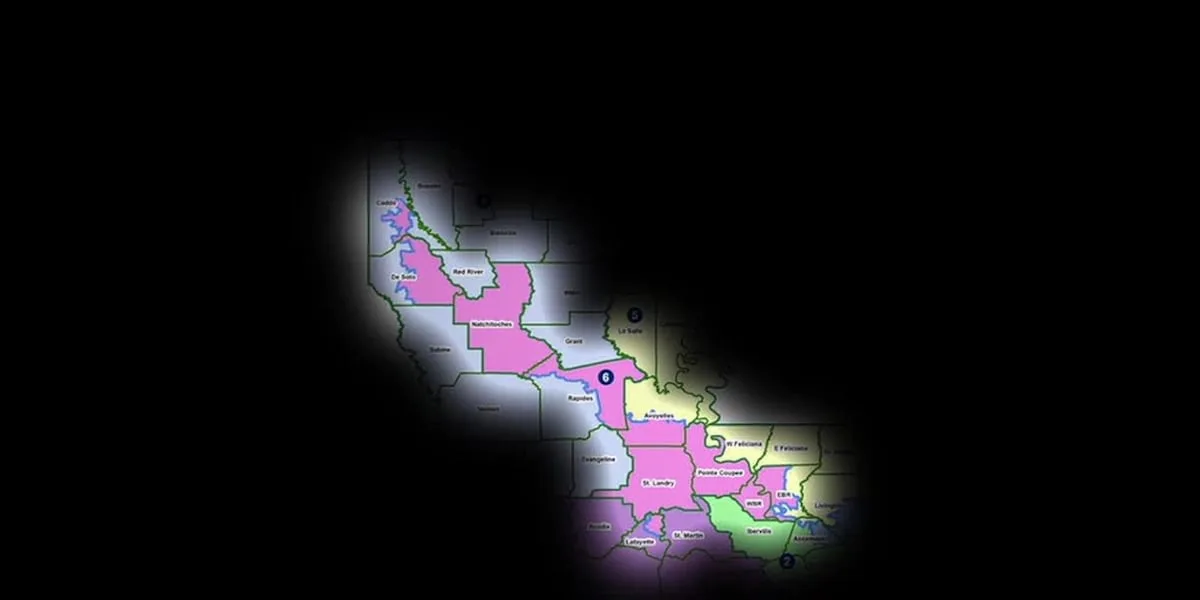
Alabama Secretary of State Wes Allen and Attorney General Steve Marshall filed emergency motions Thursday afternoon requesting that a federal court lift injunctions blocking three Alabama redistricting cases. The move came one day after the U.S. Supreme Court issued a 6-3 decision in a Louisiana case, ruling that the state's 2024 election map, which created a second majority-Black congressional district, relied too heavily on race in its design.
The Louisiana decision, which addressed the case Milligan v. Allen, has prompted Alabama officials to argue that their own court-imposed redistricting maps should be reconsidered under the new legal standard. Marshall said the ruling clarified that race and political affiliation cannot be assumed to be identical. "Because the lower court's injunction cannot stand in light of the Supreme Court's ruling, we have asked the court to lift the injunction," Marshall stated, adding that Alabama should have the authority to draw its own maps like other states.

Allen urged the court to expedite the process. "As the appellant in Alabama's redistricting case, I have taken the legal measures necessary, in cooperation with Alabama's Attorney General Steve Marshall to ask the US Supreme Court to take quick and decisive action which will allow Alabama to pursue congressional maps that reflect the will of the people," he said. Allen expressed hope that "our right as Alabamians to draw districts will be swiftly restored and that the days of court appointed mapmakers will be behind us."
Governor Kay Ivey offered her support for the officials' actions. "I applaud Attorney General Steve Marshall and Secretary of State Wes Allen for quickly filing emergency motions at the Supreme Court regarding Alabama's redistricting case," Ivey said. "Alabama knows our state, our people and our districts better than the federal courts or activist groups."
The redistricting dispute traces back to the Milligan v. Allen case, which resulted in a court-drawn map that created a second majority-Black congressional district now represented by Congressman Shomari Figures. Before that ruling, Alabama Republicans held six of the state's seven congressional seats.
Shalela Dowdy, one of the original plaintiffs in the case, expressed disappointment with the Supreme Court's shift. She noted that Black residents comprise approximately 27 percent of Alabama's population and argued that two majority-Black districts are necessary for fair representation. "I don't understand how this moves us forward, it actually takes us back," Dowdy said. "It takes us back to less representation, less engagement from our elected officials, and less of us having seats at the table."
The Supreme Court also denied a request requiring that future changes to Alabama's map receive approval through federal preclearance, a process overseen by the U.S. Department of Justice. The DOJ had opposed such a requirement.