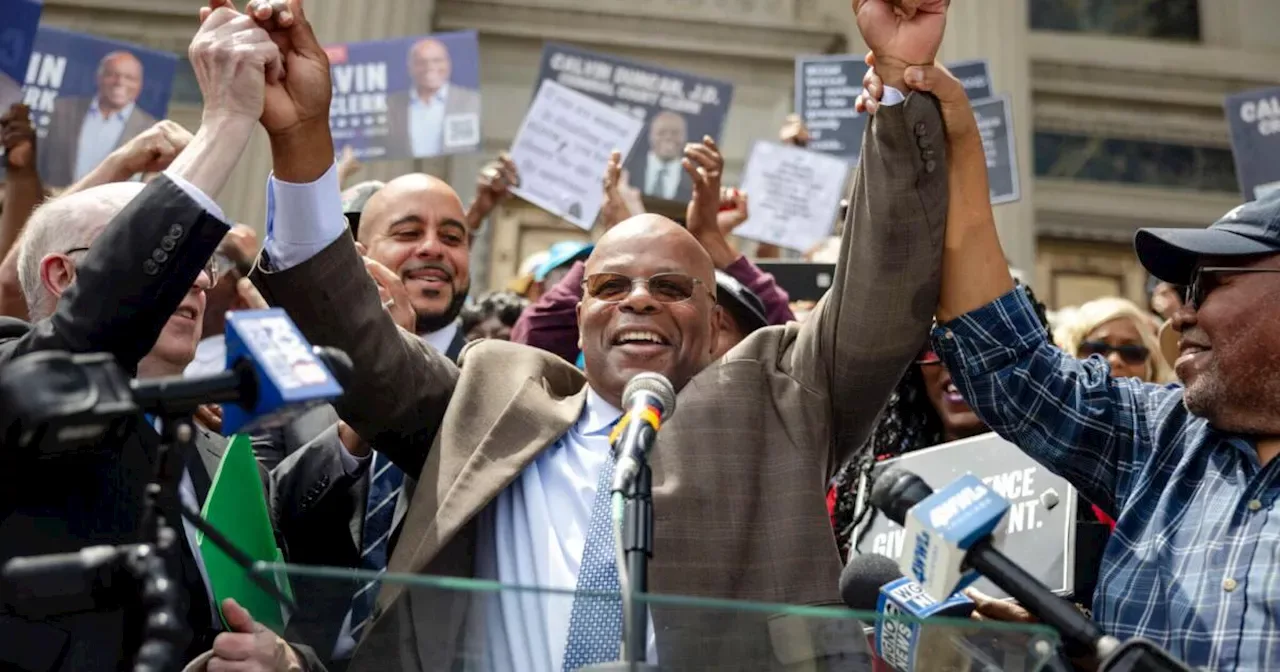
Republican Gov. Jeff Landry quietly signed into law on Thursday legislation abolishing the Orleans Parish clerk of criminal court position, a long-standing elected office. The move came just days before Calvin Duncan, who won the seat in November with more than two-thirds of the vote, was set to take office on Monday. Duncan, an exonerated man who spent nearly 30 years imprisoned for a crime he did not commit, had requested a federal judge allow him to assume the position as scheduled.
Republicans framed the elimination as a consolidation effort designed to streamline the local judicial system and reduce costs. The legislation merges the civil and criminal court clerk offices in Orleans Parish, bringing it in line with all other parishes in the state that operate under a single clerk's office. According to the legislative auditor's office, the change would save the state approximately $27,000 and the city $233,000, though long-term consolidation costs remain unknown. The legislation also shifts about $1.17 million in state expenditures to the parish.

Democrats condemned the action as government overreach that violates the will of voters in a predominantly Black parish. Duncan, a 63-year-old Democrat whose murder conviction was vacated in 2021 after evidence emerged that police officers lied in court, has vowed to challenge the law. His name appears on the National Registry of Exonerations.
"It's a sad thing to see the state government repeating what happened to Black public officials during Reconstruction," Duncan said, pledging to vindicate the voters of New Orleans. Rep. Mandie Landry, a New Orleans Democrat unrelated to the governor, described Republican efforts as "atrocious" and expressed concern about implications for other elected positions statewide.
Sen. Jay Morris, the Republican author of the legislation representing a district several hours from New Orleans, acknowledged the timing disadvantaged Duncan but maintained the change was constitutional and about improving government efficiency. Morris said he expected lawsuits but argued the state does not "make policy around here for just one person." Gov. Landry told the Associated Press the consolidation aimed at "cleaning up a system in Orleans Parish that has been plagued by dysfunction and corruption for years."
The civil and criminal court clerks currently maintain separate physical offices and different case management systems. The consolidation is part of a broader Republican push during the ongoing legislative session to overhaul the Orleans Parish judiciary, including proposals to abolish several other elected judicial positions—though those would take effect later, allowing current officeholders to complete their terms.
Concerns about voter disenfranchisement loomed large in the debate. Orleans Parish is a Democratic stronghold with a predominantly Black electorate. Rep. Edmond Jordan, a Democrat, told Morris: "Mr. Duncan was elected by 68% of the vote in a city that's majority African American. This is the will of the people, and what your bill attempts to do is usurp the will of the people."