

A key obstacle in finalizing a tentative US-Iran peace agreement revolves around the controlled unfreezing of $6 billion held by Qatar, earmarked for humanitarian aid. These funds, frozen since a prisoner swap brokered under President Biden, are intended to buy food and medical supplies for Iran but remain withheld amid ongoing diplomatic sensitivities.
The planned deal would gradually release the funds in stages tied to Iranian compliance with benchmarks, including reopening and demining the Strait of Hormuz, a vital global shipping route. This arrangement aims to allow time for further negotiations addressing the disposition of roughly 1,000 pounds of highly enriched uranium held by Iran, a critical nuclear nonproliferation concern.

The funds currently held by Qatar stem from a prisoner exchange in September 2023, which saw the release of detained Iranian-Americans in return for Iranian detainees held by the US. However, Iran-backed Hamas’s surprise attacks on Israel shortly after complicated the thawing of relations, resulting in a freeze of these assets. The US has emphasized that no direct transfer of money to Iran will occur; instead, purchases of humanitarian goods will proceed under strict oversight.
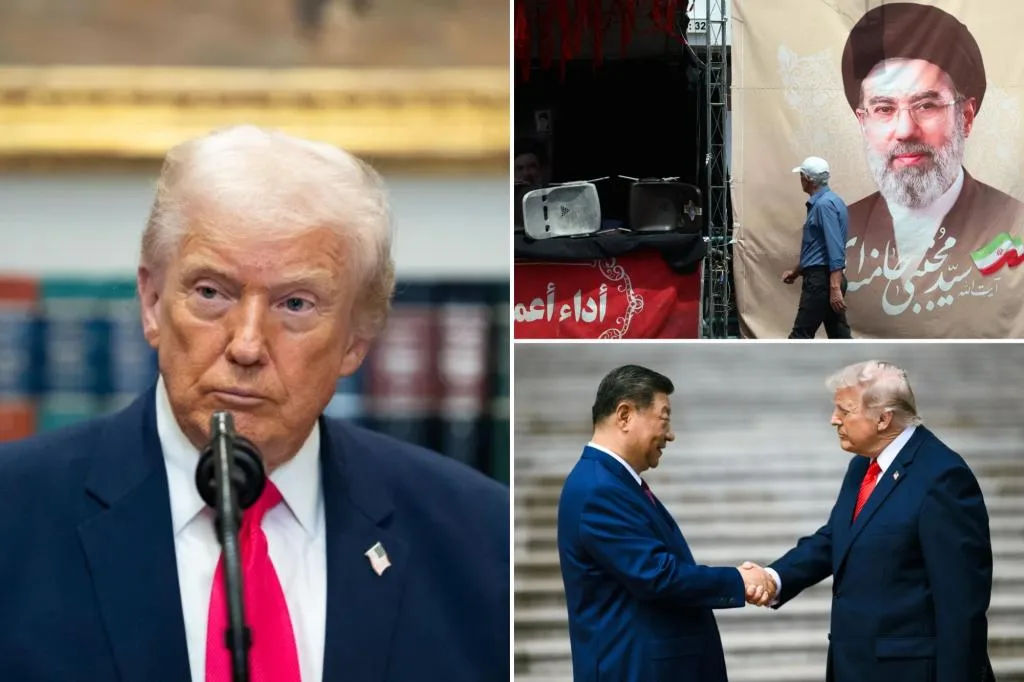
Negotiations have reached their most advanced stage yet, with officials describing the pending memorandum of understanding as close to completion. A recent high-level White House meeting, convened by former President Trump and including key national security advisors, focused on resolving outstanding issues. Trump highlighted his firm stance against Iran maintaining nuclear weapons and insisted that nuclear material removal and destruction would be a joint effort involving the US, China, Iran, and the International Atomic Energy Agency.
The process faces additional complications since Iran’s Supreme Leader Mojtaba Khamenei has remained hidden due to assassination fears, complicating communications and slowing decision-making. Despite this, US officials expect the final terms to be settled within days, not weeks.
Chinese President Xi Jinping has offered assistance in implementing the deal, reflecting broader international cooperation on this sensitive diplomatic front. The ongoing negotiations balance cautious progress on reopening a strategic maritime corridor with stringent conditions on nuclear disarmament and humanitarian engagement.