

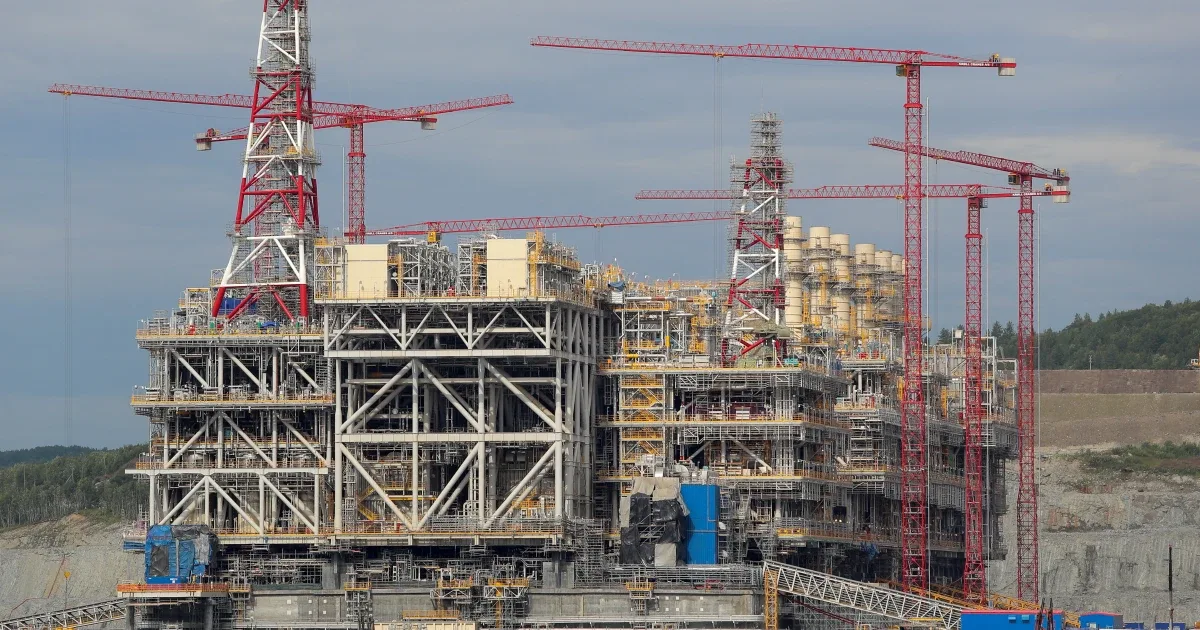
China is advancing plans to receive Russian liquefied natural gas (LNG) from sanctioned projects at a new terminal in Longkou, Shandong province. This development marks a significant expansion of Chinese import capacity for Russian energy, particularly from the Arctic LNG 2 project, which has faced international restrictions since late 2023.
The Longkou terminal, operated by PipeChina, has completed its mechanical construction and is expected to start operations before October 2026. Its annual capacity of 5 million metric tons, although smaller than the existing Beihai terminal’s 6 million metric tons, broadens China’s role as a key buyer for Russian LNG. The facility’s proximity to Russia’s Far East staging area at the Koryak floating storage unit makes it strategically suited to handle cargo flows efficiently.

Since the first sanctioned Arctic LNG 2 shipment reached the Beihai terminal in Guangxi, China has received multiple cargoes totaling approximately 2.6 million metric tons. Beyond Arctic LNG 2, Beihai has also accepted shipments from Russia’s Portovaya LNG terminal, another asset affected by U.S. sanctions, indicating that sanctioned Russian LNG has found established import routes in China.
The Arctic LNG 2 facility, backed by Novatek, Russia’s largest independent gas producer, targets nearly 20 million metric tons of annual production. However, the project operates under capacity constraints, with only two production lines active and work on a third line delayed. The addition of Longkou as a new Chinese entry point could ease market pressure and sustain the project’s output despite sanctions.
This expansion signals a broader shift as Europe plans to phase out Russian energy supplies by 2027, enhancing the importance of Asian markets, particularly China, for Moscow’s LNG exports. In the previous year, China imported over 7.5 million metric tons of Russian gas, underlining the growing bilateral energy ties.
Further signs of resilience in the Arctic LNG 2 project emerged when construction of its third production line resumed after nearly two years of suspension, with key components transported from China to Russia. This indicates that while sanctions have slowed development, they have not halted Russia’s long-term LNG ambitions.