

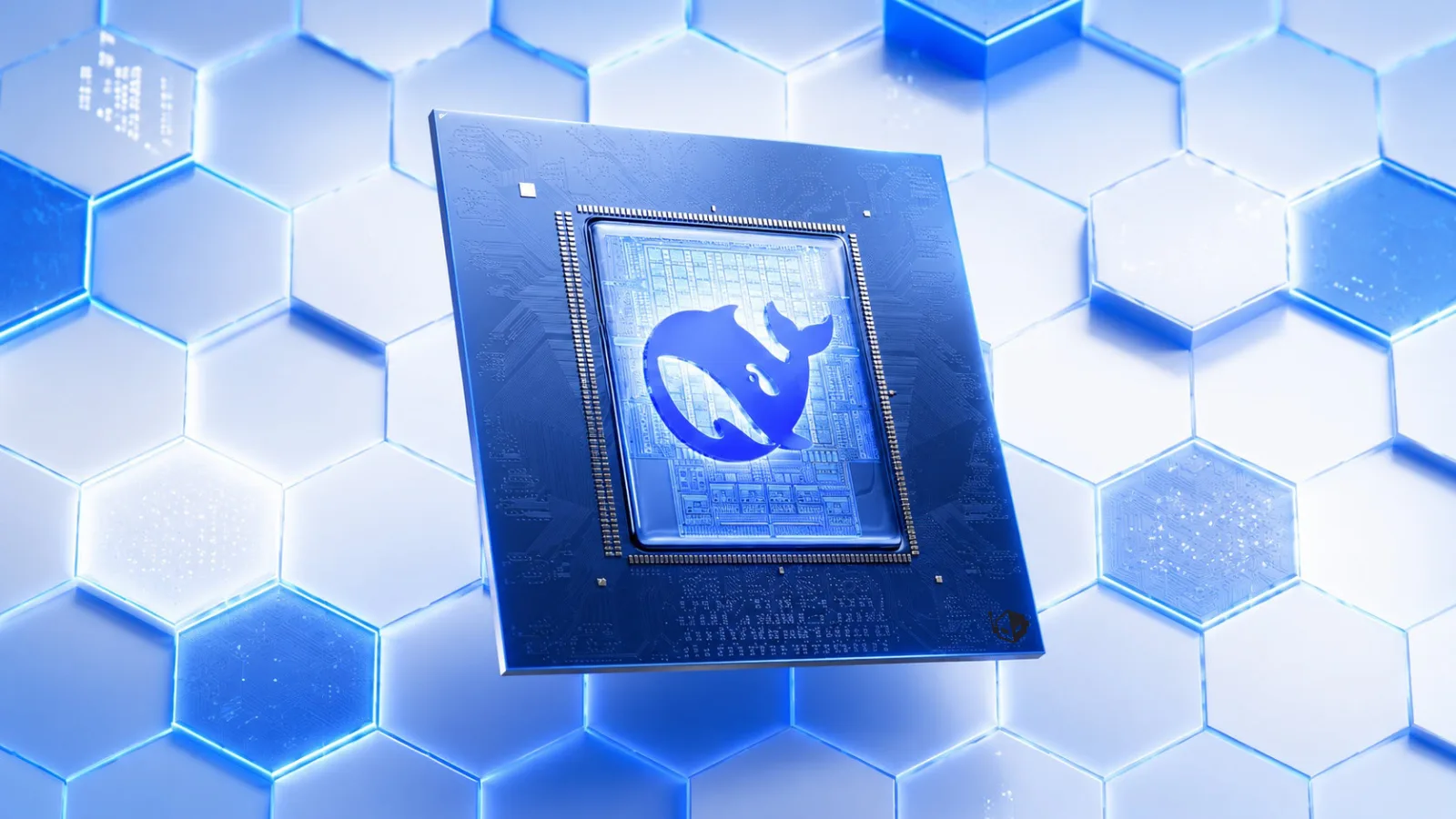
China’s top AI company DeepSeek has embarked on developing a proprietary AI inference chip, aiming to break away from dependence on foreign and domestic chipmakers like NVIDIA and Huawei. This move aligns with China’s strategic push for self-sufficiency in AI hardware as the country tightens restrictions on imported technology.
Currently, Chinese AI firms rely heavily on NVIDIA GPUs and Huawei’s AI accelerators to train and deploy models. However, NVIDIA’s most advanced GPUs face import bans, and some shipments reportedly enter China through unofficial channels. Huawei remains pivotal in providing domestic AI hardware, but DeepSeek’s new chip project signals a shift toward in-house silicon solutions tailored to specific AI workloads.

DeepSeek’s focus on an inference accelerator — a chip designed to efficiently execute trained AI models — represents the company’s attempt to reduce costs and hardware dependency. While NVIDIA continues to offer support for DeepSeek’s latest AI models on its banned Blackwell GPUs overseas, inside China only scaled-down versions like the H200 and H20 chips remain available.
Other major Chinese firms such as Alibaba and Baidu have similarly begun designing their own AI chips, reflecting a broader trend across the country to develop custom silicon adapters optimized for their AI tasks. Although NVIDIA’s newer Vera CPUs are still accessible to Chinese companies, GPUs, which are critical for AI acceleration, have become heavily restricted.
Industry analysts caution that DeepSeek’s chip may initially face challenges attracting customers beyond China’s borders, given the global dominance of established players like NVIDIA and Huawei. Nonetheless, the initiative underscores a fundamental shift as AI companies worldwide seek proprietary hardware solutions to maintain competitive advantages and circumvent export controls.