

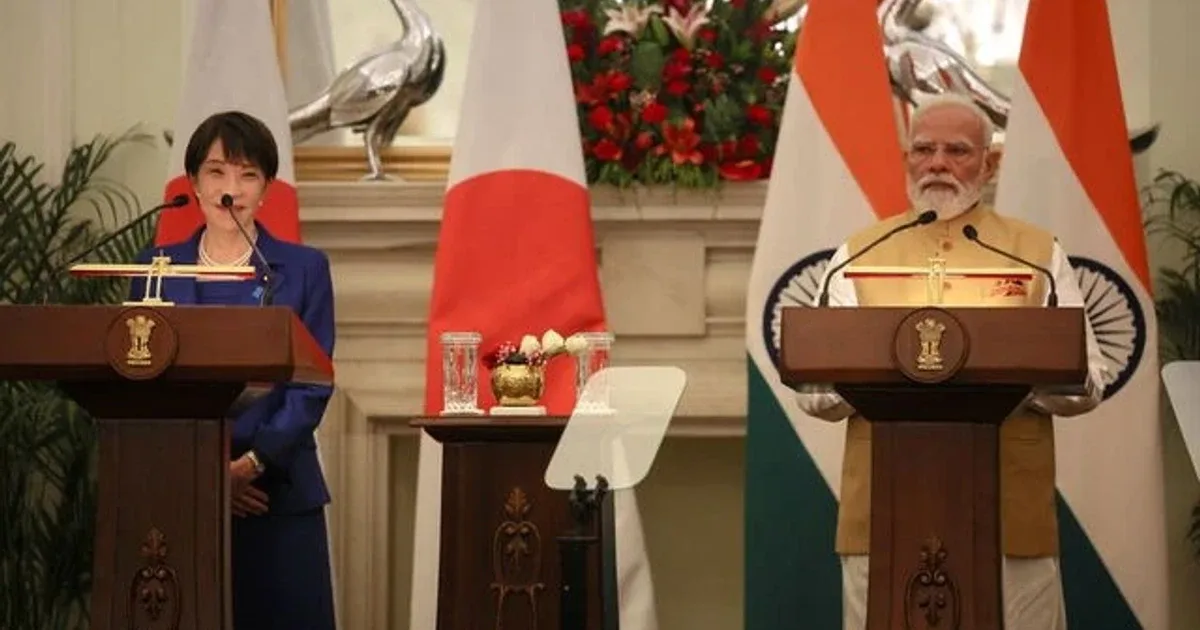
India and Japan have advanced their strategic partnership by setting a target to channel ¥10 trillion in Japanese investment into India over the coming decade. This commitment aims to deepen collaboration across artificial intelligence, critical metals, energy, and defense sectors, signaling a clear shift towards integrating economic and security agendas amid evolving Indo-Pacific dynamics.
During Japan’s prime minister’s first official visit to India, the two countries agreed on a detailed economic-security roadmap. It focuses on key areas including semiconductors, green hydrogen, supply-chain resilience, startups, and next-generation mobility. This strategy highlights the imperative for both nations to secure critical raw materials and technologies essential for future industries while safeguarding manufacturing capabilities from external vulnerabilities.

The partnership has moved from ceremonial diplomacy to concrete cooperation, marked notably by their first joint defense co-development project. This initiative reflects a growing trust and cautious approach toward regional security challenges. In the energy domain, the governments launched a biogas initiative poised to build 1,000 plants across India, diversifying energy sources and reducing reliance on single supply points.
Alongside these advances, the two governments signed five memorandums of understanding to formalize their commitments. Plans also include doubling the number of Japanese companies operating in India, strengthening commercial ties alongside strategic cooperation. Together, these steps illustrate how India and Japan view economic growth and security as intertwined priorities in managing regional power balances influenced by China’s rise.